1936 –
1991
USSR

Agriculture of the Georgian SSR
The agriculture of the Georgian SSR occupied a unique place in the economy of the Soviet Union, performing the function of the main supplier of subtropical crops. During collectivization, which began in the late 1920s, traditional agriculture was transformed into large-scale mechanized production.
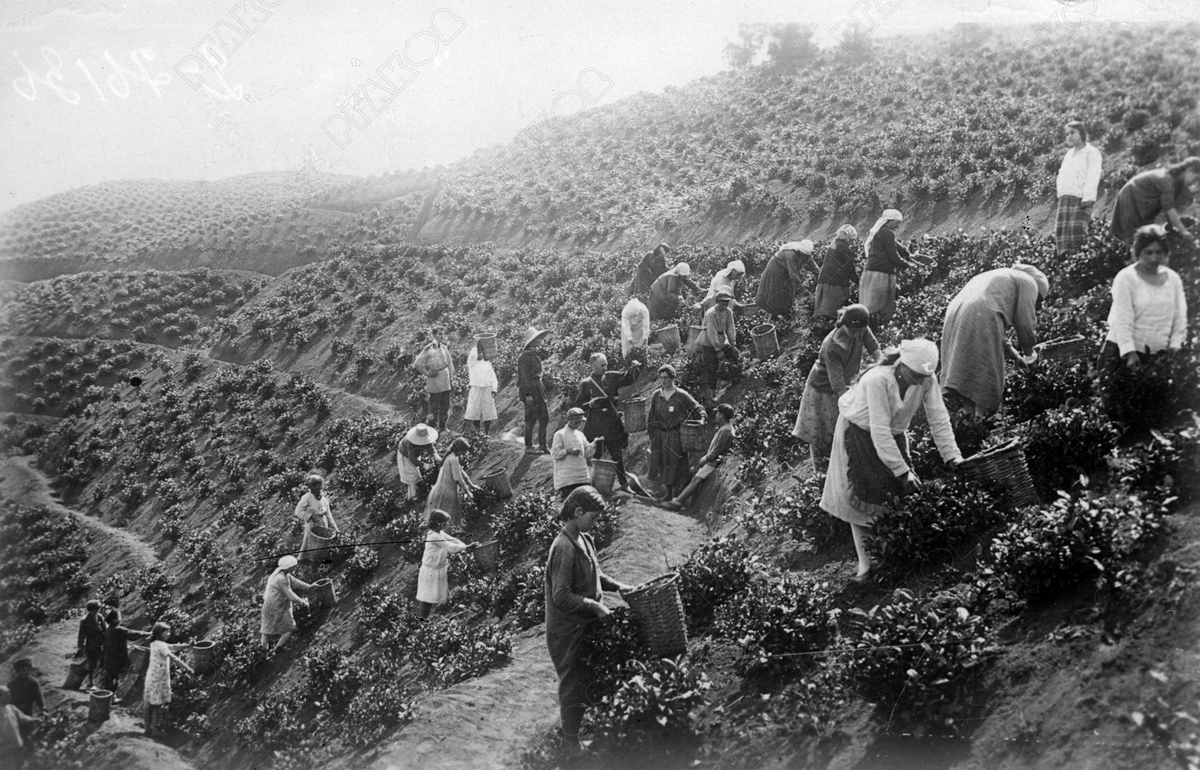
A key achievement was the development of the tea industry. Although the first plantations appeared back in tsarist times, it was precisely in the Soviet period that tea became a strategic crop. The mass establishment of tea plantations began in the 1930s, especially in the western regions of the republic. By 1940, Georgia was producing the absolute majority of the tea consumed in the USSR, which allowed the country to abandon the import of this product.
Citrus cultivation became another calling card of the Georgian countryside. In Adjara and Abkhazia, extensive mandarin and orange groves were created. Soviet agronomists were able to adapt heat-loving plants to the local climate, making mandarins an affordable product for citizens of the Union during the winter period. The peak of development of this branch came in the postwar time. For example, in the 1950s, the volumes of the citrus harvest reached record indicators. This was possible thanks to the creation of specialized state farms and the application of new agrotechnical methods developed by local scientific institutes.
Viticulture and winemaking, which have a centuries-old history in Georgia, acquired an industrial scale. In the eastern part of the republic, especially in Kakheti, wineries were modernized. The Soviet standardization system made it possible to bring Georgian wines to the all-Union market as a product of high quality. Well-known brands, such as Khvanchkara and Kindzmarauli, became symbols of Georgian hospitality. On July 15, 1930, the first standards for controlled designations of wines were approved, which protected the authenticity of the product. However, by the 1980s, problems with quality arose due to the desire to fulfill gross plans, which led to the well-known anti-alcohol crisis of 1985.
An important role was played by the cultivation of tobacco and essential-oil crops. Georgia supplied the Soviet industry with raw materials for cigarettes and perfumery. Within the framework of the Khrushchev agrarian program in the 1950s, corn was actively introduced, which became the basis of the feed base for livestock breeding. Although this campaign had contradictory results, it contributed to the development of mechanization in rural areas. Irrigation systems, built in the 1960s and 1970s, made it possible to irrigate the arid territories of eastern Georgia, increasing the yield of grain and vegetables.
The scientific support of the agrarian sector was at a high level. The Georgian Scientific Research Institute of Tea and Subtropical Crops, founded on May 12, 1930, developed new varieties of plants. The education of agrarians was carried out at the agricultural universities of Tbilisi and Kutaisi. The social infrastructure of the countryside was improving; roads and houses of culture were being built. Despite the existence of a shadow economy and shortages in the late period, the material and technical base created in Soviet times remained the foundation of the agrarian sector of independent Georgia after 1991.