USSR

Ballet
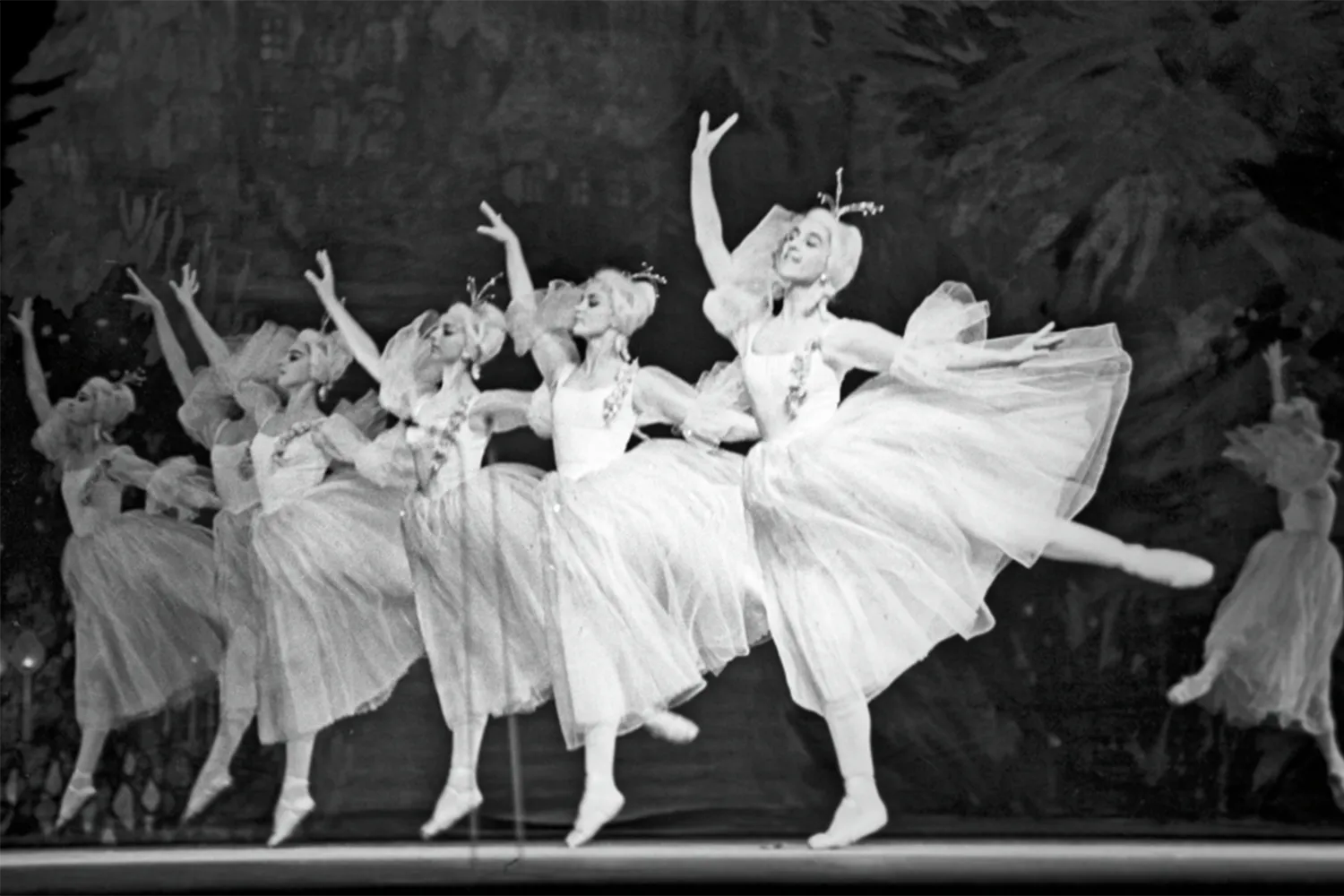
Before the socialist revolution, ballet was the favorite art of the tsarist family. After 1917, in conditions of famine and civil war, the genre was under threat of disappearance. Many considered it a relic of the past. It is said that Lenin proposed to get rid of ballet, but the People's Commissar of Education Anatoly Lunacharsky insisted on preserving its best traditions. Stars of the imperial stage Anna Pavlova and Vaslav Nijinsky emigrated.
A period of bold experiments set in. Drama theater directors came into conservative ballet.
Kasyan Goleizovsky, who had graduated from the imperial school, worked with his own studio, staging avant-garde ballets (Joseph the Beautiful, 1925), which surpassed the innovations of Diaghilev. Later his choreography in the films Circus and Spring challenged Hollywood. In 1927, Gliere's The Red Poppy, with a class-based accent, was staged at the Bolshoi Theater. Khachaturian's ballet Gayane became a famous synthesis of classics and folk dance, receiving the Stalin Prize. The Sabre Dance is recognizable throughout the world.
In 1931, Agrippina Vaganova became the artistic director of the Leningrad ballet. Among her pupils was Marina Semenova. In 1930, Semenova moved to the Bolshoi Theater, where her debut in La Bayadere caused a sensation. She danced in Swan Lake for 25 years. She performed at the Paris Opera (1935–36). From 1953 she became a teacher, raising Plisetskaya, Bessmertnova, Ananiashvili, and other prima ballerinas. Together with her, Alexei Yermolaev came to Moscow, known for his airy jump ("ballon"). After an injury he became a teacher, raising Vasiliev, Liepa, Lavrovsky, and Godunov.
The flowering of Galina Ulanova's work came at the time when Soviet ballet was searching for its own path. She danced in Leningrad and Moscow. During the war the theater was evacuated to Tashkent, and Ulanova performed in hospitals. In 1944 she was transferred to the Bolshoi Theater. At the age of 46 she performed Juliet on tour in London (1956), which brought her worldwide fame. Ulanova is the only ballerina with two lifetime monuments (Stockholm, St. Petersburg). Her partner was Mikhail Gabovich, whose pupil Vladimir Vasiliev continued the dynasty.
In 1964, Yuri Grigorovich was appointed ballet master of the Bolshoi (he led it until 1995). Under his leadership, the troupe made about 100 triumphant tours. In 1969, the ballet Spartacus was staged and became a triumph. The role of Crassus was performed by Maris Liepa. Liepa, having started in Riga, thanks to his talent and teacher Nikolai Tarasov, became a premier of the Bolshoi Theater.
Maya Plisetskaya made her debut in 1941, joined the Bolshoi troupe in 1943, and became prima in 1960. In 1967, Carmen Suite was staged for her (music by Bizet, orchestration by Shchedrin). From 1983 she worked abroad. She created her own sharp style of dance. The duet of Ekaterina Maksimova and Vladimir Vasiliev became a symbol of the Bolshoi Theater (from 1958). In 1975 Maksimova sustained an injury, but in 1976 she triumphantly returned to the stage in Giselle.
A constellation of masters (Nadezhda Pavlova, Vyacheslav Gordeyev, Natalia Bessmertnova, Mikhail Lavrovsky, Nina Sorokina, and others) remains forever in the history of world art.
On the opera stage of the Bolshoi Theater shone Ivan Kozlovsky, Sergei Lemeshev, Sergei Streltsov, Alexander Ognivtsev, Vladimir Atlantov, Zurab Sotkilava, Alexander Voroshilo, Mark Reizen, Maxim Mikhailov, Yevgeny Nesterenko, Natalia Shpiller, Nadezhda Obukhova, Elena Obraztsova, Irina Arkhipova, Galina Vishnevskaya, and Tamara Sinyavskaya. In Leningrad, on the stage of the Kirov Theater, the outstanding bass Boris Shtokolov and baritone Sergei Leiferkus sang.