1936 –
1991
USSR

Science in the Armenian SSR
Science in the Armenian SSR reached outstanding heights thanks to such figures as Viktor Ambartsumian and the brothers Abram and Artem Alikhanov. Their work not only shaped the development of the republic but also made a fundamental contribution to world physics and astronomy, making Armenia one of the recognized scientific centers of the Soviet Union.
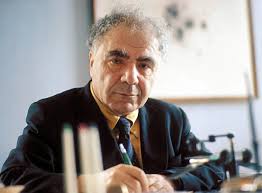
Viktor Ambartsumian, born on September 6, 1908, in Tiflis, became the founder of theoretical astrophysics as a separate scientific discipline. His main scientific achievement was the discovery of stellar associations, which he first reported on May 15, 1947, at a meeting of the USSR Academy of Sciences. This discovery overturned ideas about the evolution of stars and galaxies, proving that star formation continues into the modern era, and not only in the past. Ambartsumian also studied the activity of galactic nuclei and the nature of nebulae, proposing new methods of spectral analysis. To realize his ideas, he initiated the creation of the Byurakan Observatory, the ceremonial opening of which took place on November 10, 1946. The observatory quickly became one of the leading centers of world astronomy, equipped with the largest telescopes of the time. Ambartsumian continuously headed the Academy of Sciences of the Armenian SSR from 1947 until 1993, providing support for the republic's scientific infrastructure and protecting scientists from political repression. He died on August 12, 1996, leaving behind a rich legacy and an international school of astrophysicists.
The brothers Abram and Artem Alikhanov were outstanding experimental physicists whose research laid the foundation of nuclear physics in the region. Abram, born on October 14, 1904, and Artem, born on January 19, 1908, together carried out a number of key experiments in Moscow and Leningrad before moving to Armenia. Their most famous achievement was the detection of the positron in 1932, practically simultaneously with Carl Anderson, which confirmed the existence of antimatter and Dirac's theory. They also studied the spectrum of beta decay and the nature of the weak interaction, which was of critical importance for the development of quantum mechanics. During the years of the Great Patriotic War they were evacuated to Yerevan, where they laid the foundations of a physics school. On February 15, 1943, the Yerevan Physics Institute was organized, which the brothers headed in different years. The institute became a major center for research into cosmic rays and nuclear physics, where the first cyclotron in the Transcaucasus was built. Abram Alikhanov died on December 15, 1970, and Artem Alikhanov died on December 10, 1978, continuing their work until their last days.
The contribution of these scientists to the development of the Armenian SSR is difficult to overestimate. They created scientific schools that trained generations of researchers and engineers. Thanks to them, Armenia became one of the scientific centers of the Soviet Union, attracting specialists from across the USSR. Universities, institutes, and streets in Yerevan bear their names. The scientific community of the republic still relies on the foundation laid by Ambartsumian and the Alikhanov brothers in the middle of the twentieth century. International recognition of their work is confirmed by numerous awards and membership in foreign academies of sciences.