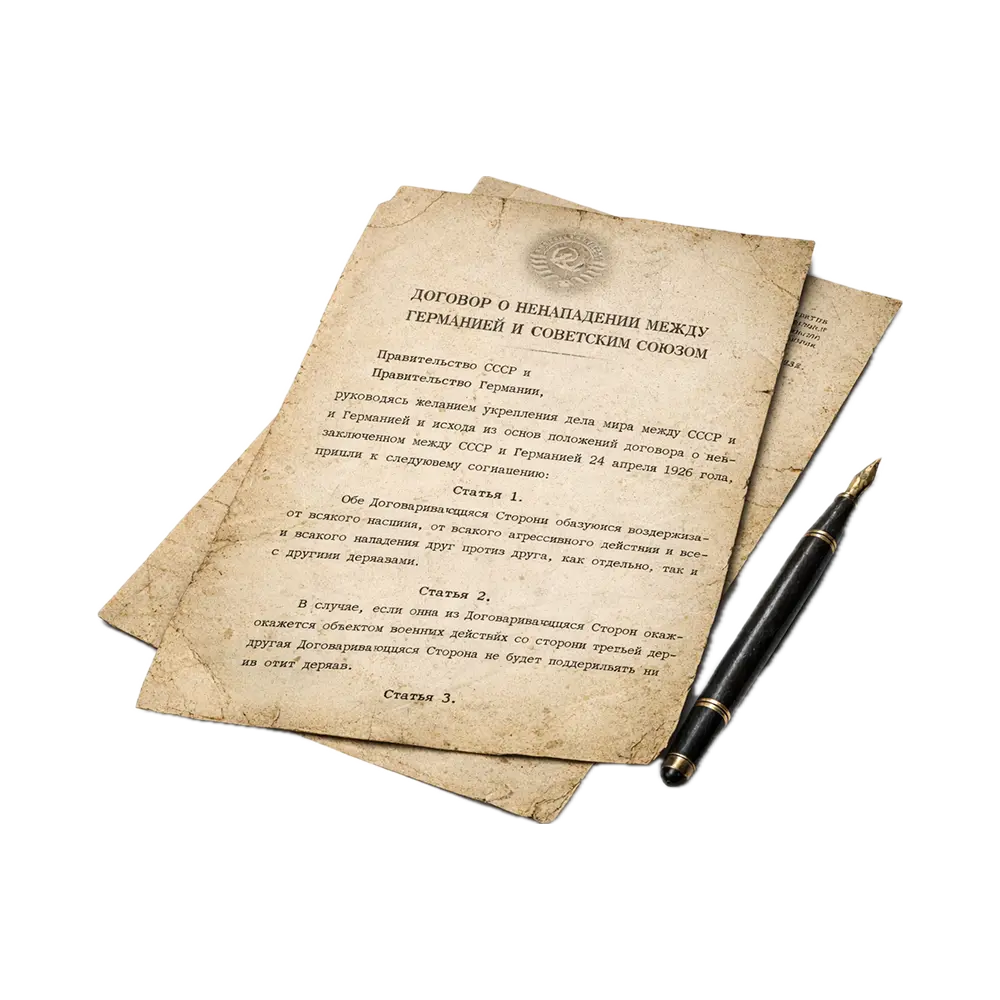

The USSR concluded a non-aggression pact with Nazi Germany (Molotov-Ribbentrop Pact 1939)
In international relations of the 1930s, when the German NSDAP in 1933
year implemented an aggressive program to expand “living space” to the Urals, the USSR sought to create a system of collective security through the Eastern Pact and treaties with France and Czechoslovakia. However, Great Britain and France adhered to the principles of a peaceful settlement, tacitly approving the Anschluss of Austria, the occupation of the Rhineland and the partition of Czechoslovakia as part of the Munich Agreement. The Soviet Union found itself surrounded by unfriendly neighbors (Poland, the Baltics, Finland, Romania), guaranteed to be ready to let the Wehrmacht through, and in the east the threat from militarized Japan, which was moving closer to Germany, was growing.
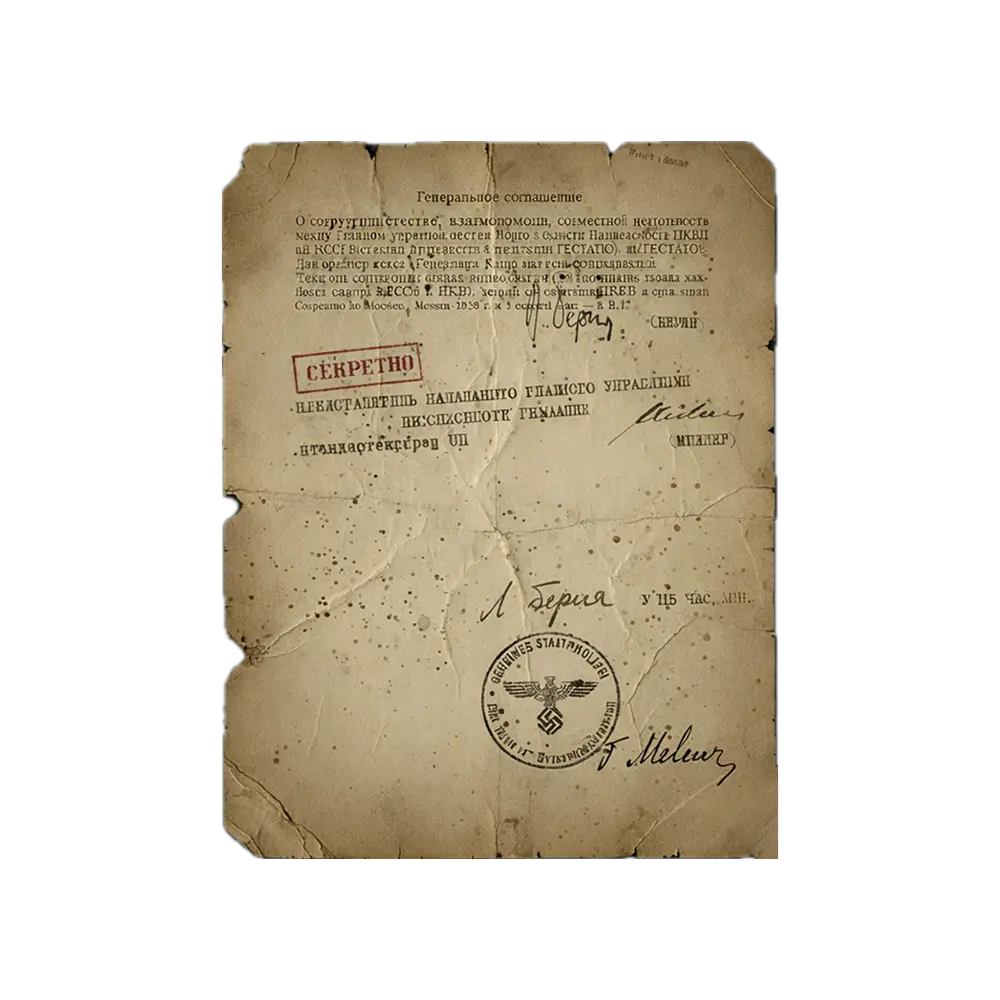
Negotiations between Moscow and London and Paris on security guarantees failed due to the artificial delay of the process by Western supporters, who simultaneously discussed their interests with Berlin. As a result, the Soviet leadership made the unpleasant but pragmatic decision to conclude a non-aggression pact with Germany, which delayed the invasion and complicated relations between Germany and Japan. The socialist state had to take a step with the fascist regime, since capitalist democracies were not interested in equal dialogue, thereby confirming that fascism is only capitalism without a democratic mask.
No comments yet. Be the first.