USSR

USSR housing construction
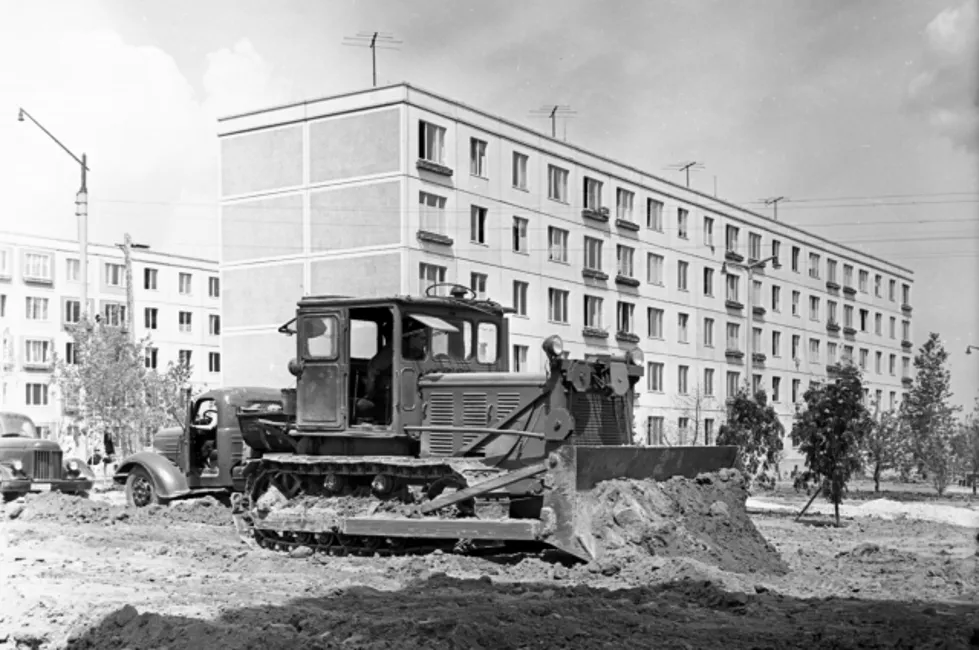
In the 1950s, the USSR faced an acute housing shortage. The colossal loss of housing stock due to wartime destruction combined with growing urbanization and industrial production. The problem was extremely acute. The approaches of the late 1940s and early 1950s, which had placed their bet on handsome brick buildings, did not match the situation. A large part of the population lived in dilapidated houses with limited amenities. It was necessary to build modern structures, technologically, and, most importantly, quickly. The Soviet government set a course for the industrial construction of prefabricated panel and block standardized houses, which made it possible to implement a mass housing construction program throughout the country.
The first district of experimental houses was Moscow's Cheryomushki. They became a symbol of comfortable and affordable housing. Around them all the necessary social infrastructure was created — schools, kindergartens, hospitals, shops, transport, including the metro. The metro was for the most part built before the erection of the five-story apartment buildings. Public space was arranged in the best possible way: residents received spacious courtyards with greenery, and around the buildings there was openness and sky. Individual nine-story dominants made it possible to see festive fireworks and the distant landscape. Nearby were islands of nature, parks, and forests. The concept of the garden city found a worthy embodiment in these neighborhoods. All the newly built neighborhoods had their own style and high-rise dominants, creating a unique image of a bright, harmonious city. Alongside the five-story buildings, ensembles of brick buildings continued to be built, forming stylistically remarkable groups, as, for example, Leninsky Prospekt in Moscow. This was a ceremonial thoroughfare along which guests entered the capital from Vnukovo airport.
From 1956 to 1963, the housing stock of the USSR nearly doubled: from 640 million square meters to nearly 1.2 billion. This growth was significantly greater than the entire volume of housing built during the first 40 years of Soviet power. In the 1970s, the number of stories in new districts rose, apartments became larger, but the general concept of the garden city did not change. The districts remained cozy and harmonious. All social infrastructure, recreational areas, and the commercial sphere were built into the planning even before construction began. The districts were built according to plan; the concept envisaged a bright image, without gloomy tones, and a balanced height of buildings (example — Yasenevo). All cities developed according to a plan; housing construction proceeded together with the construction of social facilities, roads, and the metro. Cities were zoned into industrial, residential, and recreational zones. Construction was carried out by industrial methods, which accelerated the pace. Specialized institutes developed series of residential buildings. All housing was provided to citizens free of charge. In addition, there was also the possibility of cooperative construction, which made it possible to improve one's conditions faster than in the queue.