USSR

Shipbuilding
The Soviet Union has achieved significant success in military shipbuilding.
Civil shipbuilding was supported by the import of ships from socialist and capitalist countries.
The USSR achieved significant success in the construction of nuclear icebreakers; 5 ships were built. Another 2 were produced in Finland, and their nuclear plants were manufactured and installed in the USSR.
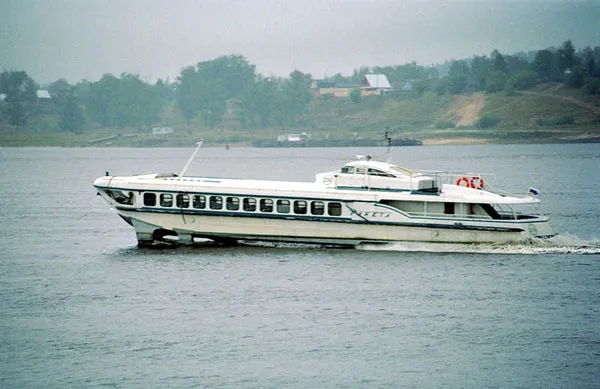
Aircraft and ekranoplanes became one of the symbols of Soviet shipbuilding. Leading design engineer Rostislav Evgenievich Alekseev began work on creating hydrofoil ships during the war at the Krasnoye Sormovo plant in Gorky (Nizhny Novgorod). In 1951, Alekseev Design Bureau began work on a passenger hovercraft, called the Raketa.
The first "Rocket" was presented in Moscow during the 1957 World Festival of Youth and Students. The passenger hydrofoil, whose speed was head and shoulders above all civilian ships that existed at that time, produced a huge effect in the world. The hovercraft “Raketa”, “Kometa”, “Meteor”, “Voskhod” were actively exported. For this work, the team led by Rostislav Alekseev was awarded the Lenin Prize in 1962.
Having fully realized the idea of hydrofoils, Alekseev moved on to work on ekranoplanes - ships hovering above the surface of the water.
In 1962, Alekseev Design Bureau began work on the KM ekranoplan project (model ship). “KM” had truly gigantic dimensions - wingspan 37.6 m, length 92 m, maximum take-off weight 544 tons. Before the appearance of the An-225 Mriya aircraft, it was the heaviest aircraft in the world.
Western experts, having received a photograph of the experimental model, called it the “Caspian Monster” (the tests took place in the Caspian Sea).
The Caspian Monster made its first flight on October 18, 1966. It was piloted by two pilots, one of whom was Rostislav Alekseev himself. The flight was successful. In fact, this project opened up a completely new direction on the border of aviation and navigation, in which its own laws and rules had yet to be developed.
The impact ekranoplane "Lun", the idea of which belonged to Alekseev, was launched in the summer of 1986, and in 1991 it was officially put into service, becoming part of the Caspian Flotilla