USSR

Development of culture and art
Decrees on the nationalization of cultural properties after the October Revolution were part of establishing state control and preserving values. Special attention was given to the elimination of illiteracy, as educated citizens were expected to build a socialist society.
The first post-revolutionary years were characterized by an experimental approach: constructivism, production art, agitational porcelain, and revolutionary posters. Avant-garde artists (Mayakovsky, Pasternak, Yesenin, Svetlov, Aseev, Bagritsky, Dzhambul, Kolas, Dzhalil, Meyerhold, Tatlin) participated in building a new culture. Various associations emerged: Proletkult, LEF, and RAPP.
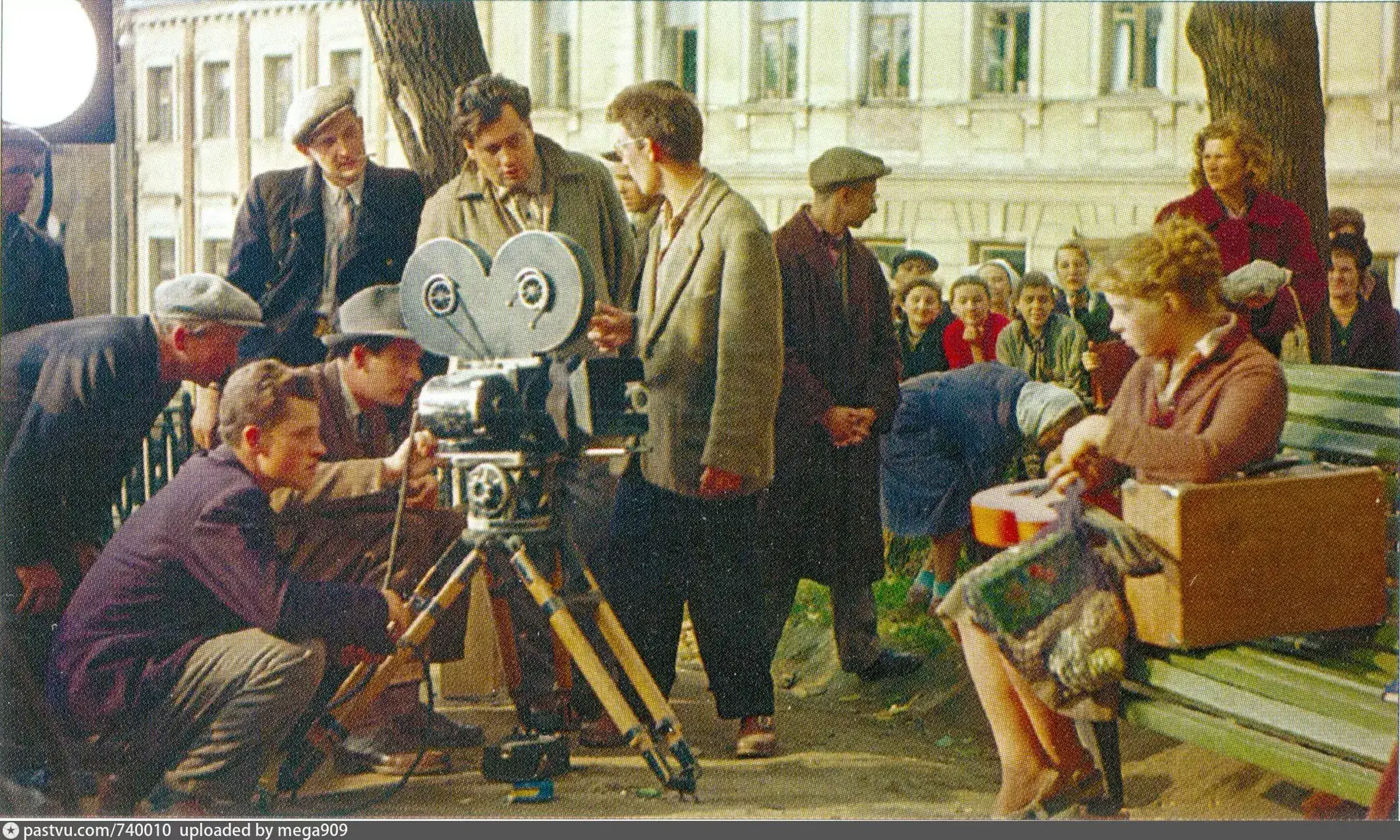
Cinema, which Lenin called "the most important of all the arts," was developed by Eisenstein, Pudovkin, and Dovzhenko. In parallel, the education system was expanding, workers' faculties were being created, and the network of libraries and clubs was growing. Culture was becoming accessible to the masses.
In the 1920s, radio broadcasting began spreading across the country, radio receivers were installed in public places, and the production of loudspeakers ("radio points") was established. In the 1930s, the use of shortwave transmitters made it possible to reach remote regions.
From the mid-1930s, cultural policy became unified. The charter of the USSR Writers' Union (1934) established socialist realism. Major works were created: "And Quiet Flows the Don" and "Virgin Soil Upturned" by Sholokhov, "How the Steel Was Tempered" by Ostrovsky, "The Road to Calvary" and "Peter the First" by A. Tolstoy, "The Pedagogical Poem" by Makarenko, "Time, Forward!" by Katayev, and "The Life of Klim Samgin" by Gorky. Simonov, Tvardovsky, Mikhalkov, Barto, Marshak, Kharms, Chukovsky, and Paustovsky were among the active writers. Gorky was elected the first chairman of the Writers' Union. Kuprin returned in 1937, and Vertinsky in 1943.
The cinema of the 1930s–early 1950s is famous for films by the Vasiliev brothers ("Chapayev", "The Defense of Tsaritsyn"), Romm ("Lenin in October", "The Thirteen"), Pyriev ("Tractor Drivers", "The Swineherd and the Shepherd", "Cossacks of the Kuban"), Alexandrov ("Jolly Fellows", "Circus", "Volga-Volga"), Kozintsev ("The Youth of Maxim"), Lukov ("Two Soldiers"), Annensky ("The Wedding"), and Gerasimov ("The Young Guard", "The Teacher"). Gerasimov filmed chronicles of the Yalta and Potsdam Conferences and liberated cities, and later "Liberated China" and "The Country Doctor". He trained a constellation of actors and directors; since 1986, VGIK has borne his name.
Alexander Ptushko directed fairy-tale films ("The New Gulliver", "The Golden Key", "The Stone Flower", "Ilya Muromets", "Sadko"). Walt Disney invited him to Hollywood. Alexander Rou directed "By the Pike's Command", "Vasilisa the Beautiful", "The Little Humpbacked Horse", and "Kashchei the Immortal" (premiered on May 9, 1945).
In 1932, the USSR Composers' Union was established. Classical composers included Prokofiev, Shostakovich, Kabalevsky, Sviridov, Khachaturian, Khrennikov, Dunaevsky, Blanter, the Pokrass brothers, Mokrousov, Solovyov-Sedoi, and Alexandrov. Alexandrov organized the Red Army Song Ensemble. In June 1941, he wrote "Arise, Great Country" to the lyrics of Lebedev-Kumach. The premiere took place at Belorussky railway station. The jazz of Utesov and Tsfasman was widely popular.
In the post-war years, culture flourished: the country's reconstruction, the romance of great construction projects and space exploration, and international contacts. A new generation of creators emerged.
Soviet cinema of this period is famous for films by Pyriev (adaptations of classics), Kozintsev ("Hamlet", "King Lear"), Gerasimov ("And Quiet Flows the Don"), Bondarchuk ("War and Peace", "Destiny of a Man"), Ozerov (epics "Liberation", "Battle for Moscow"), comedies by Gaidai, Danelia, and Ryazanov, the aesthetics of Tarkovsky and Shpalikov, and films by Govorukhin, Lioznova, Menshov, Mikhalkov, Shukshin, Rostotsky, Todorovsky, Matveev, and many others. Documentary filmmaking also developed (Romm's "Ordinary Fascism").
Soviet animation has been developing since the 1930s (Starevich, Ptushko). Ptushko combined puppet animation with live-action acting in "The New Gulliver". Among the masters: the Brumberg sisters, Ivanov-Vano, Atamanov, Kachanov, Khitruk, Kotyonochkin, Norstein, and Shvartsman.
Disney's American cartoons influenced animators worldwide. However, Soviet animation influenced Japanese anime of the 1950s–60s. A Japanese animator saw "The Snow Queen" by Lev Atamanov in 1964. The work of Soviet artists changed his destiny, and many of his works interpret techniques used in "The Snow Queen".