USSR

Relief of international tension
The period of detente, covering predominantly the late 1960s and the 1970s, became a time of substantial reduction in the degree of confrontation between the superpowers. After the extremely dangerous Cuban Missile Crisis of 1962, the leadership of the USSR and the United States realized the necessity of establishing rules of the game that would make it possible to avoid a nuclear catastrophe. The Soviet Union actively initiated dialogue, moving from the rhetoric of the inevitability of conflict to a policy of peaceful coexistence, which became a fundamental shift in the foreign policy of the Brezhnev era.
One of the first significant steps on this path was the signing of the Moscow Treaty of 1963 on the prohibition of nuclear weapons testing in three environments. This agreement, initiated with the active participation of the USSR, put an end to open nuclear explosions in the atmosphere, in space, and underwater, which substantially reduced the level of radioactive contamination of the planet and demonstrated the possibility of cooperation even under conditions of ideological confrontation. Following this, the Soviet Union became one of the key initiators of the Nuclear Non-Proliferation Treaty of 1968. Moscow ratified this document, assuming the obligation not to transfer nuclear technology to third countries and working to reduce its own arsenals, which created a legal basis for global security and the prevention of the emergence of new nuclear powers.
The pinnacle of the policy of detente was the beginning of the 1970s, when a series of summit meetings took place between the leadership of the USSR and the United States. In 1972, the Basic Principles of Relations between the USA and the USSR were signed in Moscow, as well as the interim Strategic Arms Limitation Agreement (SALT I) and the Anti-Ballistic Missile Treaty. These documents were unprecedented in the history of the Cold War, since for the first time the parties agreed not to strive for military superiority but to limit the growth of arsenals. Soviet diplomacy achieved recognition of parity between the superpowers, which stabilized the strategic situation in the world and reduced the risk of a sudden nuclear strike.
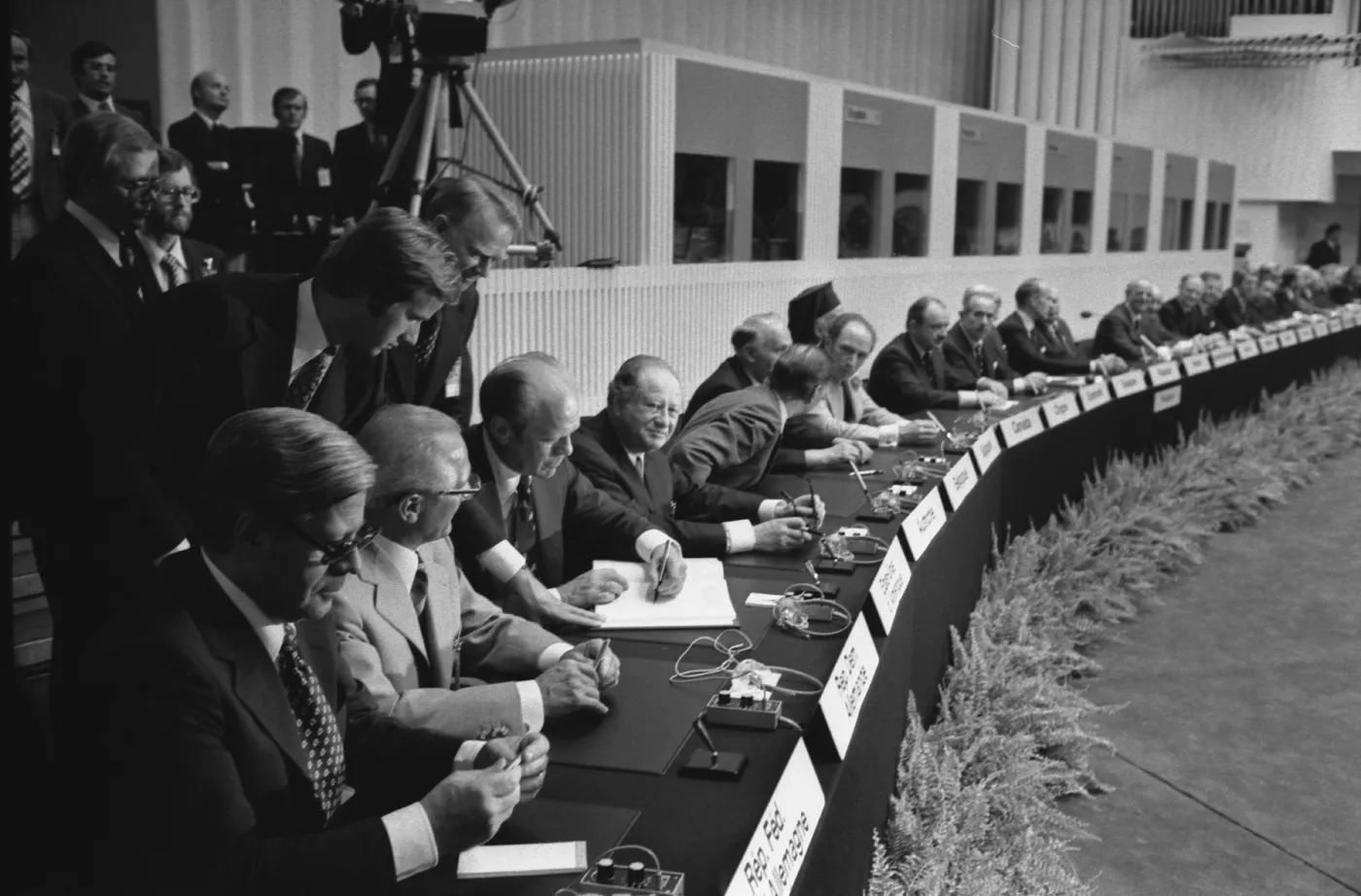
The most important event of the mid-1970s was the Conference on Security and Cooperation in Europe, concluded by the signing of the Helsinki Final Act in 1975. The Soviet Union regarded this achievement as a major diplomatic success, since Western countries officially recognized the inviolability of postwar borders in Europe and the principle of non-interference in the internal affairs of states. This consolidated the geopolitical results of the Second World War and reduced tension on the European continent, which remained the most probable theater of military conflict. In exchange, the USSR accepted obligations regarding observance of human rights, which subsequently influenced internal processes in the country, but at the moment of signing was perceived as a guarantee of stability.
In addition to military-political treaties, detente manifested itself in the expansion of scientific, technical, and cultural cooperation. A vivid symbol of this period was the experimental Apollo-Soyuz flight in 1975, when Soviet and American spacecraft docked in orbit for the first time. This project showed that even under conditions of competition, the joint solution of complex technical tasks was possible. In parallel, trade developed, including well-known grain supply deals, and cultural exchange increased, which contributed to reducing the level of mistrust between the peoples of the two blocs.
However, the process of detente proved complex and not without contradictions. By the end of the 1970s, relations again began to cool due to disagreements over regional conflicts and human rights issues. The introduction of Soviet troops into Afghanistan in 1979 effectively put an end to the period of detente, leading to a new round of tension. Despite this, the achievements of the era of detente did not pass without a trace. The system of arms control treaties created at that time laid the foundation for subsequent agreements on the reduction of nuclear potentials, and the principle of mutual security remained a key element of international politics even after the collapse of the Soviet Union.