USSR

Space project
The Soviet space program represents one of the most impressive examples of scientific and technological progress in the history of humanity. In the fierce competition of the space race, Soviet engineers and scientists managed to achieve a series of breakthroughs that forever changed our understanding of the possibilities of venturing beyond Earth. These achievements laid the foundation for modern cosmonautics and demonstrated to the world the high potential of Soviet science and engineering thought.
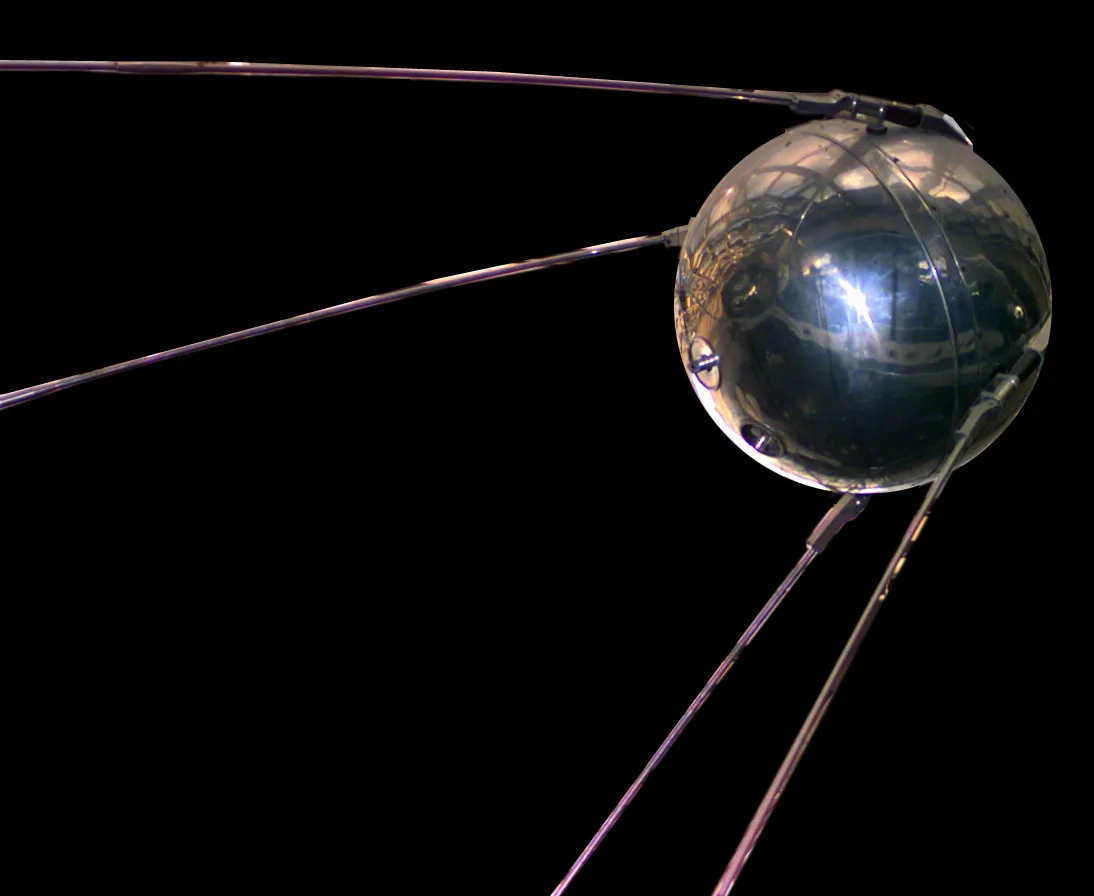
The beginning of the space age was marked on October 4, 1957, with the launch of the first artificial Earth satellite. This spacecraft, known as Sputnik-1, became the first man-made object to enter orbit around our planet. Just a month later, an even bolder step followed when the dog Laika was sent into orbit aboard Sputnik-2. This experiment was of critical importance, as it allowed scientists to study the effects of weightlessness and cosmic radiation on a living organism, paving the way for future manned flights and proving the fundamental possibility of survival in space.
The culmination of early successes was sending a human into space. On April 12, 1961, Yuri Gagarin aboard the Vostok-1 spacecraft made a historic orbital flight, circling the Earth in 108 minutes. This event became a triumph not only for the USSR but for all of humanity. Following this, Soviet cosmonautics continued to set records by sending the first woman, Valentina Tereshkova, into space and carrying out the first spacewalk, performed by Alexei Leonov from the Voskhod-2 spacecraft. These missions confirmed that humans could not only fly in space but also work outside the spacecraft.
Alongside manned programs, the USSR actively explored other celestial bodies using automated probes. Particularly impressive results were achieved in the study of the Moon. Soviet spacecraft of the Luna series were the first to make a soft landing on its surface, transmit panoramic images, and even deliver samples of lunar soil to Earth. A crucial milestone was the creation of the Lunokhods, which became the world's first planetary rovers, successfully operating on the surface of another celestial body and controlled by operators from Earth.
Equally significant were the explorations of Venus, whose conditions are considered extreme for any equipment. Soviet probes of the Venera series became the first in history to make a soft landing on this planet and transmit data directly from its surface. The spacecraft withstood enormous pressure and high temperatures, sending back to Earth the first-ever photographs of the Venusian landscape. These missions provided unique data about the atmosphere and geology of our neighbor in the Solar System, which remain relevant for scientists to this day.
The pinnacle of engineering achievement was the creation of orbital stations. The launch of the Salyut-1 station in 1971 ushered in the era of long-duration human presence in space. Later, the Mir station was created, which became the first modular orbital station and operated in orbit for fifteen years. Aboard Mir, technologies necessary for long-duration expeditions were tested, and the foundations of international cooperation were laid, which later evolved into the International Space Station project, becoming a symbol of the unification of efforts by different countries.
In the final period of the Soviet space program, the reusable space transportation system Energia–Buran was developed. Although the program did not receive mass continuation, the successful automated flight of the Buran spacecraft in 1988 demonstrated the highest level of automatic control and landing technologies. The legacy of the Soviet space program remains relevant today, as many technologies, launch vehicles, and principles of flight organization continue to be used in modern cosmonautics, reminding us of the greatness of the era of pioneers