1866 –
1925
PRC

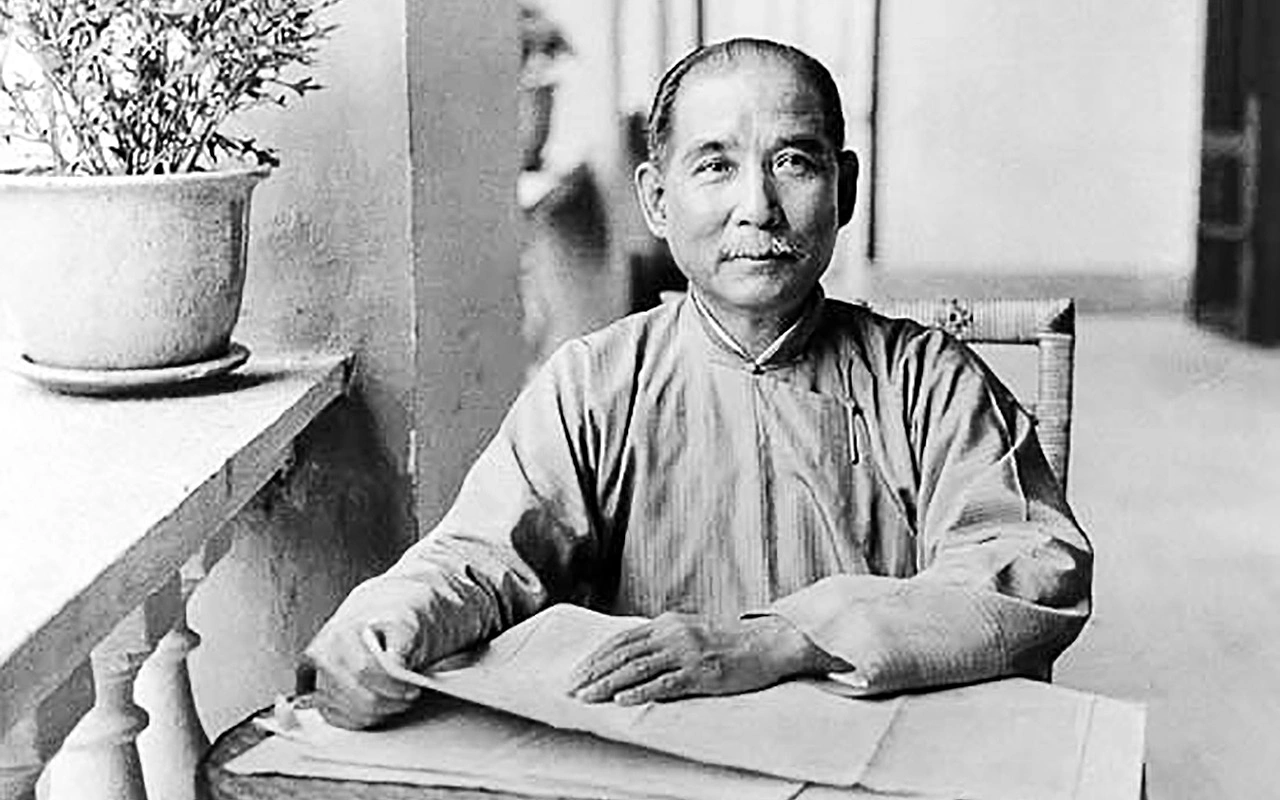
Sun Yat-sen
The Qing Dynasty, which ruled China from 1644 to 1912, became the last imperial dynasty in the country's history. Its predecessor was the Ming Dynasty, which had established itself in Chinese lands after the overthrow of the Mongol Yuan Empire. The founders of the Qing were the Manchus — an ethnic group from northeastern China (Manchuria).
In the late 16th and early 17th centuries the situation in the region grew acute: the northeastern lands were controlled by the Manchu tribes, while the rest of the country remained under Ming rule. Since each side aspired to absolute power, conflict became inevitable. As a result of a long and bloody struggle, the Manchus prevailed and founded the Qing dynasty.
By the end of the 19th century, however, the empire was experiencing decline. China effectively turned into a semi-colonial country, where the power of the central government was nominal. The state was bound by oppressive treaties imposed by the Western powers and Japan. The situation was aggravated after the two Opium Wars (1840–1842 and 1856–1860), as well as by the participation of Great Britain and France in the suppression of the Taiping rebellion (1850–1864) — a peasant war against the Qing dynasty. As a result, China lost part of its territories, and Qing power was significantly weakened.
It was in this period that Sun Yat-sen (1866–1925) played his historical role. Born on November 12, 1866, into a poor peasant family, he received his education at a missionary school in Honolulu (where his older brother lived) and at the medical institute in Hong Kong. Sun began his revolutionary activity in 1894, founding in Honolulu the first Chinese revolutionary organization, the "Revive China Society." In 1905 he created an alliance of revolutionary forces — the Tongmenghui — which prepared and carried out a series of armed uprisings in southern and central China.
In 1911, the Xinhai Revolution began, putting an end to the Qing empire and leading to the creation of the Republic of China. The uprisings began in the autumn of 1911 in the provinces of Sichuan and Hubei. On February 12, 1912, the six-year-old emperor Puyi abdicated the throne. Sun Yat-sen, returning from a long emigration, was elected provisional president of China on behalf of the provinces that supported the revolution. However, the post of president was subsequently taken by General Yuan Shikai, who had earlier been given the office of prime minister and head of the army. After Yuan Shikai's death in 1916, the so-called era of the warlords began in China, when the country found itself divided among military rulers.
In August 1912, Sun Yat-sen founded the "Chinese National Party" — the Kuomintang. The most important political legacy of the revolutionary became the doctrine of the "Three Principles of the People": nationalism, democracy, and the people's livelihood. After the October Revolution in Russia, Sun Yat-sen spoke out in favor of cooperation with Soviet Russia and a close alliance with the Chinese communists.
Sun Yat-sen passed away in 1925. He rests in a mausoleum located in Nanjing. In 1940, the government of China posthumously bestowed upon him the title of "Father of the Nation." A memorial complex of Sun Yat-sen also exists on Taiwan. His activity laid the foundation for the modern Chinese state.