1904 –
1997
PRC

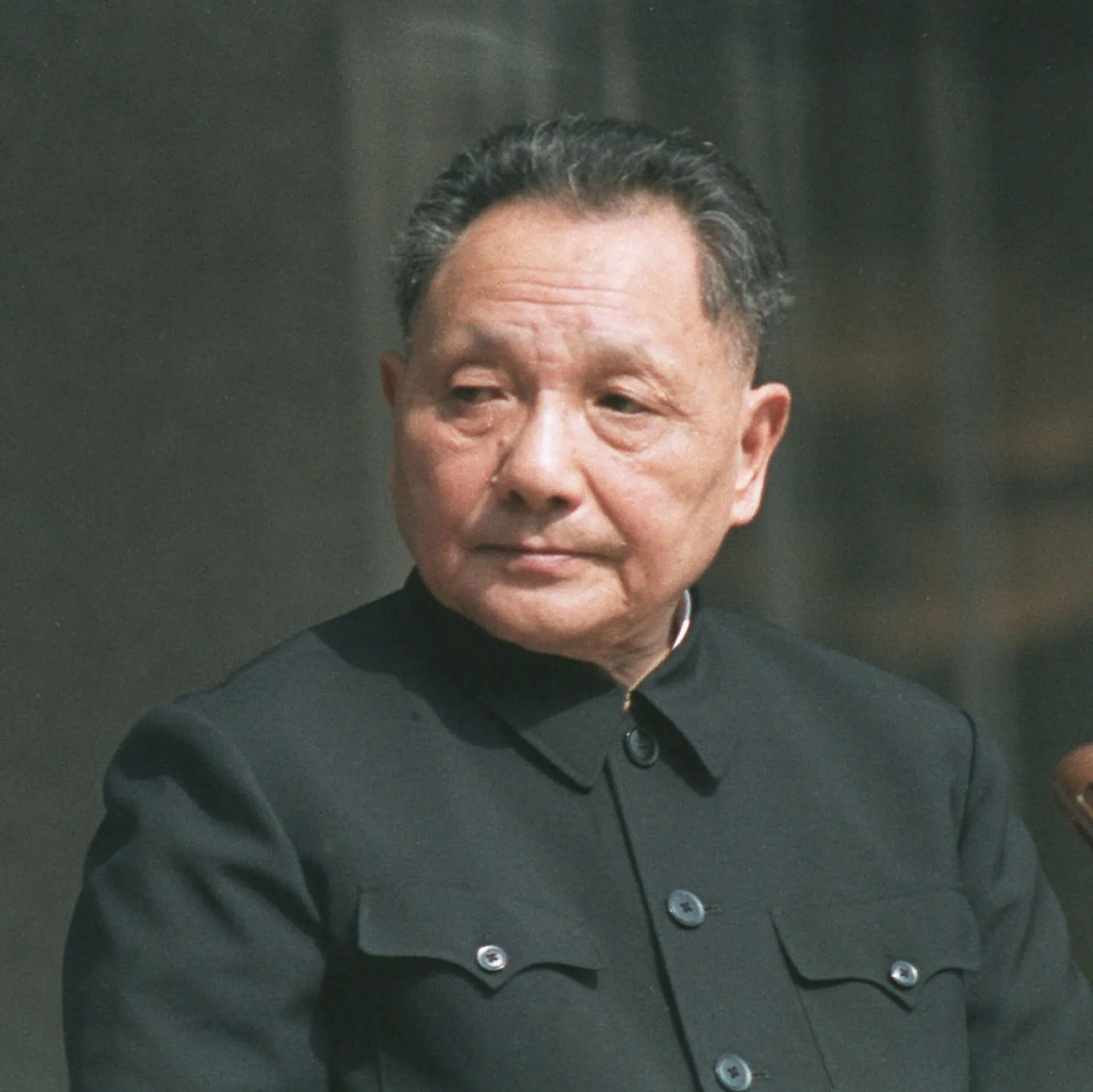
Deng Xiaoping
After Mao Zedong's death in 1976, pragmatists led by Deng Xiaoping came to power in China. They led the country out of crisis, restructured and revived the economy, and created a new model of China's development.
Deng Xiaoping (1904–1997). In 1920, the 16-year-old Xiaoping had the opportunity to go to France to study. In 1922 he joined the Communist Youth League of China, where he made friends with the future premier of the State Council and minister of foreign affairs of the PRC, Zhou Enlai, and got involved in propaganda work among representatives of the Chinese diaspora in Europe. Returning to China, Deng Xiaoping, together with Mao Zedong and Zhou Enlai, fought against the Kuomintang and then against the Japanese. After the communists' victory, Deng Xiaoping held important posts in the leadership of the PRC, becoming vice-premier and then a member of the Politburo of the CC of the CCP. In September 1956, Deng Xiaoping was elected general secretary of the CC of the CCP, in effect becoming the second man after Mao. Deng Xiaoping took part in correcting the mistakes made during the years of the "Great Leap Forward" policy, with which he successfully coped, introducing elements of market regulation into the planned economy.
However, during the years of the "Cultural Revolution," Deng Xiaoping fell into disgrace. He was removed from all posts and sent for "re-education" to a tractor factory in Jiangxi province. While in exile and seeing the difficult condition of the common people, Deng Xiaoping began working on a plan of reforms necessary for the country's dynamic and sustainable development. With Zhou Enlai's help, Deng Xiaoping was able to return to Beijing in 1973 and restore his position in the leadership of the Communist Party of China. However, in early 1976, after the death of Zhou Enlai, Deng Xiaoping was again removed from all posts and forced into retirement. A faction headed by Mao's last wife, Jiang Qing, attempted to seize power and remove competitors. However, after Mao Zedong's death on September 9, 1976, the new premier of the State Council, Hua Guofeng, initiated the arrest of Jiang Qing and her supporters (the so-called "Gang of Four") and a public trial against them. In July 1977, Deng Xiaoping was returned all his posts — member of the Central Committee, Politburo, and Standing Committee, deputy chairman of the CC and Military Council, deputy premier of the State Council, and chief of the General Staff of the PLA.
In December 1978, the Third Plenum of the CC of the CCP was held, at which Deng Xiaoping proclaimed the course of the "Four Modernizations": agriculture, industry, defense, and the scientific-technical sphere. From now on, blind adherence to Mao's precepts and to the ideological dogmas of Marxism was discontinued. The CCP's ideological line was transformed into the directive "to emancipate the mind, to seek truth in facts." The main criterion of truth became practice.
In 1979 Deng announced that everything in China could be criticized and changed except for four things: the socialist path, the dictatorship of the proletariat, the leading role of the Communist Party, and the ideas of Mao Zedong. The politician thereby designated those pillars on which the socialist state rested.
Deng Xiaoping died on February 19, 1997.