1893 –
1976
PRC

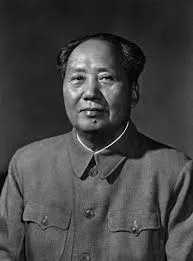
Mao Zedong
Mao Zedong was born on December 26, 1893, into a well-off family of landowners in Hunan province. Mao was inspired by the socialist revolution in Russia and became imbued with the ideas of Bolshevism. He loved to read, wrote poetry, and had a good knowledge of Chinese historical texts. He received a teacher-training education.
In 1921, Mao Zedong became one of the founders of the Communist Party of China (CPC). In 1923, the CPC formed an alliance with the Kuomintang; Mao even joined the Kuomintang, where he served as head of the Propaganda Department of that party's Central Executive Committee. Such an alliance was necessary for the centralization of the country and for the struggle against the warlords who controlled various regions. After the right wing of the Kuomintang, headed by Chiang Kai-shek, refused to continue the alliance with the communists, a civil war began in the country. Mao Zedong actively participated in the creation of the Workers' and Peasants' Revolutionary Army of China (renamed in 1928 the Red Army of China). In September 1927 he led an armed uprising against the Kuomintang in the provinces of Hunan and Jiangxi (also known as the "Autumn Harvest Uprising"), which ended in defeat. Mao Zedong was arrested but managed to escape and led the remnants of the army into the mountainous region of Jinggang. Mao Zedong's first wife, by whom he had three sons, was arrested by the Kuomintang in 1930 and killed.
In 1934, in order to avoid the encirclement of the Chinese Red Army by the forces of Chiang Kai-shek, Mao Zedong led the transition from Jiangxi across the western territories of the country to the north — the "Long March." During this march, at an enlarged session of the CC of the CPC (the Zunyi Conference), he was elected to the Standing Committee of the Politburo. In effect, it was then that he was recognized as the leader of the CC of the CPC and of the Chinese Red Army. Mao's eldest son, Anying, was sent to the USSR in 1936. There he studied for a long time, and after the start of the Great Patriotic War he sent a letter to Stalin asking to be sent to the front. In 1943, Sergei Yunfu (the name he was given in the USSR) entered NCO training courses and in 1944 went to the front. There, as a deputy political officer of a tank company, he took part in battles for Poland and met the end of the war in Berlin. Returning home to his father in 1946 as an experienced officer, Anying took part in the Korean War. During one of the American air raids in 1950, he was killed.
From 1943, Mao Zedong held the post of chairman of the Secretariat of the CC of the CPC; from 1945, chairman of the Central Committee. As head of the Military Council, he made a great contribution to the victory of China's armed forces in the anti-Japanese liberation war (1937–1945) and to the rout of the Kuomintang forces in the civil war. After Chiang Kai-shek's flight to Taiwan, on October 1, 1949, Mao Zedong proclaimed the People's Republic of China. Until 1954 he headed the Central People's Government Council (the highest organ of power); in 1954–1959 he held the post of chairman of the PRC (head of state); he remained chairman of the CC of the CPC until his death in 1976.
Beginning in the 1950s, he was the initiator of controversial political and economic campaigns in China — in particular, the campaign for the ideological re-education of the intelligentsia and for the eradication of abuses in the administrative apparatus, the policy of the "Great Leap Forward," the "Cultural Revolution," accusations against the USSR of departing from communist ideology and the stoking of anti-Soviet sentiment, and the imposition of a personality cult of Mao in China. As a result, after Mao's death, at a 1978 plenum of the CC of the CPC, the personality cult of the former leader of the PRC was subjected to criticism; however, already in 1981 it was noted that Mao's services "to the Chinese revolution far outweigh his miscalculations," which fixed the principle of evaluating his role in China's history.