1889 –
1948
India

Jawaharlal Nehru
Beginning in 1888, the work of the Indian National Congress was joined by a successful lawyer from the line of Kashmiri Pandits, a Cambridge graduate, Motilal Nehru. He belonged to the most moderate representatives of the Congress, but in the 1910s he became imbued with the ideas of Mahatma Gandhi and moved over to nationalist-patriotic positions. In 1919, he was elected president of the INC.
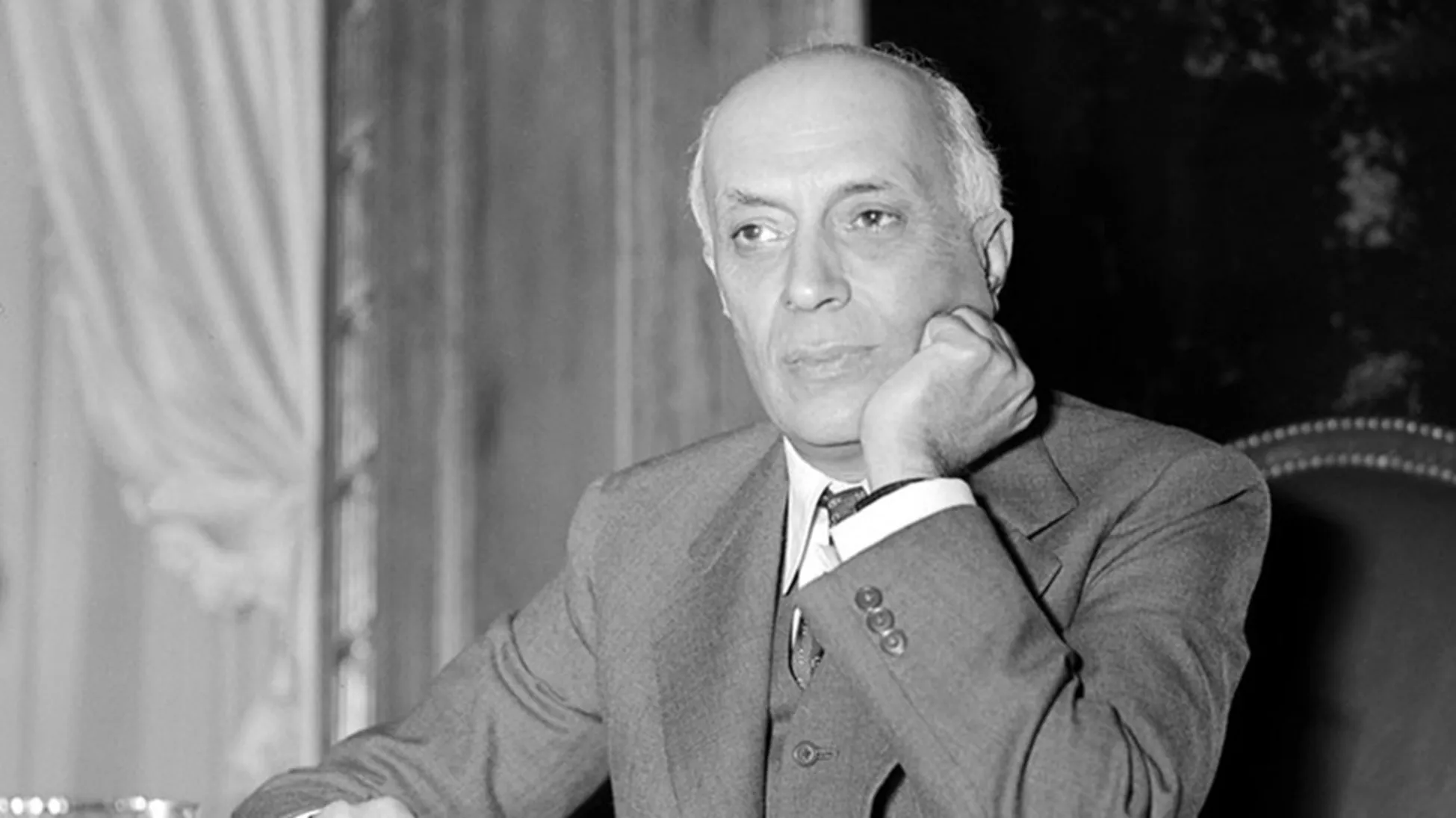
One of his closest associates became his son Jawaharlal, born in 1889. Jawaharlal received his primary education at home, then studied at school in Great Britain. In 1905 he went to England, studied at college and then at Cambridge University in the natural sciences, where he specialized in three subjects — chemistry, geology, and botany. At the same time, he devoted a significant amount of time to the study of literature, history, politics, and economics. After graduating from Cambridge in 1910, Nehru began studying jurisprudence in London and in 1912 received the right to legal practice.
In 1912 he returned to India, entered the service of the High Court, and was soon elected a delegate to the Indian National Congress (INC). In 1916 his first meeting took place with the leader of India's national liberation movement, Mahatma Gandhi. Jawaharlal Nehru's progressive and radical views contributed to his being put forward, from the late 1920s, as one of the leaders of the left wing of the Indian National Congress. He was part of the leadership core of the party; from 1923 he was repeatedly elected secretary of the Executive Committee, then in 1927 he became general secretary of the INC, and in 1929 — chairman of the INC.
Jawaharlal Nehru's work at the head of the Congress proved fruitful. By 1938, the membership of the party had reached 5 million people. In November 1927 he visited the USSR, where he took part in the celebrations of the 10th anniversary of the October Revolution. In 1927, father and son Nehru began advancing the idea of transforming India from a colony into a British dominion — effectively an independent state. On August 30, 1928, they presented a memorandum containing a draft Indian constitution.
The British authorities reacted negatively to the Nehru family's ideas. Nehru actively spoke out against the fascist aggression in Ethiopia (then Abyssinia) and in Europe, in support of Republican Spain and of China's struggle against Japanese aggression. During the Second World War of 1939–1945, he actively spoke out in support of the Soviet Union in the struggle against Nazi Germany and its satellites. From 1946, Britain began to lose control of the situation in India rapidly. In 1946, Jawaharlal Nehru became vice-president of the provisional government of India — the Executive Council under the Viceroy. The recognition of India's independence itself took place peacefully, but blood was shed in the end during the partition of the country into Hindu and Pakistani parts. The religious "bomb" planted by Curzon detonated upon the country's attainment of independence. In 1947, Nehru personally headed the government, as well as the Ministry of Foreign Affairs and the Ministry of Defense of the young independent state. Nehru held the post of prime minister and foreign minister until his death in 1964.
With the name of Jawaharlal Nehru is associated the development and implementation of the basic principles of the domestic and foreign policy of the Indian Republic, known as the "Nehru course." As chairman of the Planning Commission, he took a direct part in drafting the first three five-year development plans of India (1951/52–1965/66). The measures of economic and socio-cultural construction developed and implemented under Nehru's leadership initiated the restructuring of the colonial-feudal structure of Indian society. In the field of foreign policy, Jawaharlal Nehru pursued a policy of "positive neutrality," aimed at the struggle for peace, international cooperation, and against the threat of war, neocolonialism, and racism. If Gandhi can be called the "father" of the Indian nation, then Nehru is its "architect." Nehru's socio-economic course is called "Indian socialism," based on economic planning and import substitution through the creation of an extensive state sector in industry. In 1961, Nehru became one of the founders of the international Non-Aligned Movement, together with Tito, Nasser, and Sukarno. Nehru was inspired by the economic transformations in the USSR, and even more so by the Bolsheviks' national policy aimed at the equality of peoples.
Jawaharlal Nehru died on May 27, 1964, in New Delhi.