1890 –
1969
Vietnam

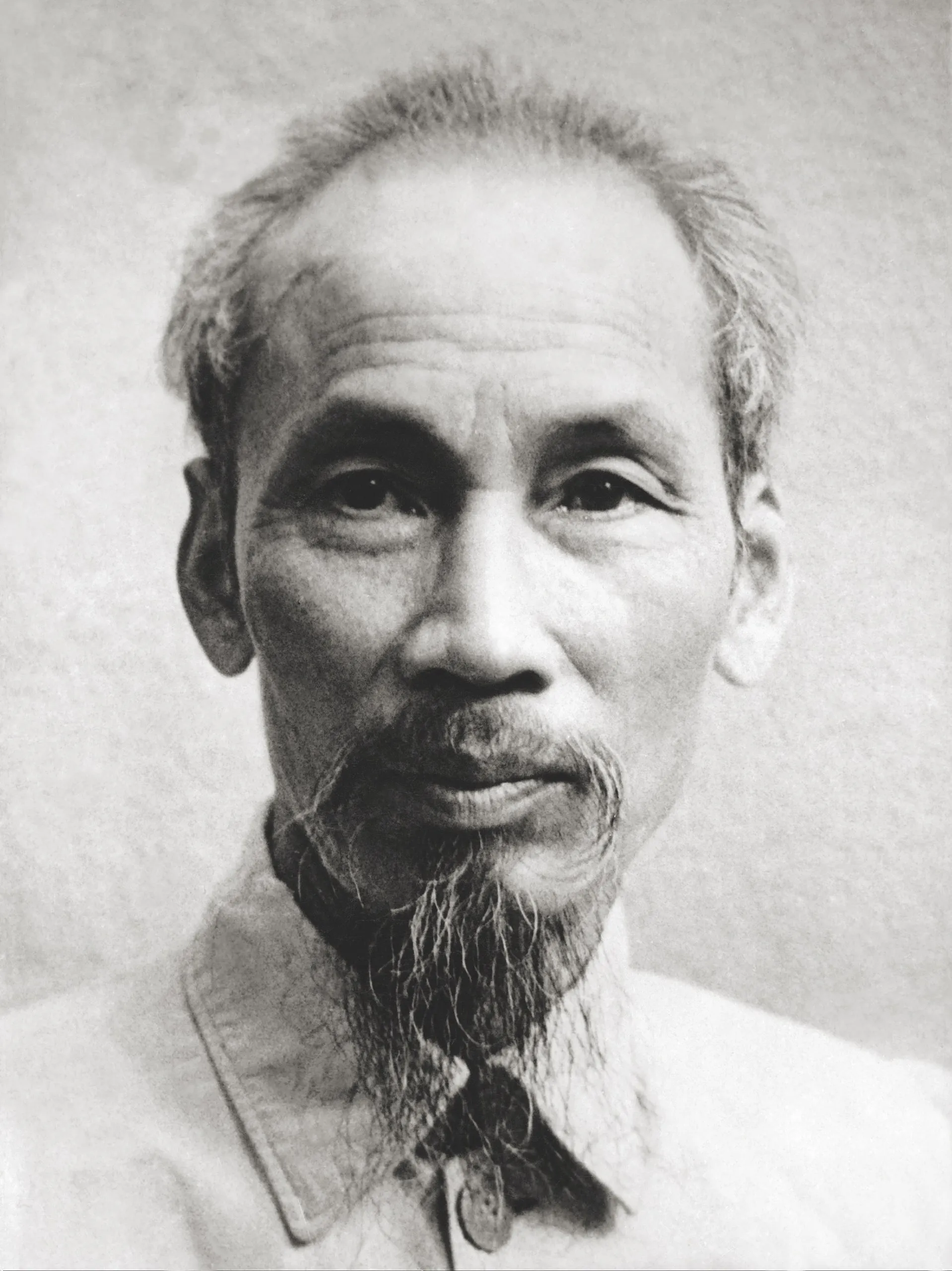
Ho Chi Minh
Ho Chi Minh's birth name was Nguyễn Sinh Cung. Chi Minh is a pseudonym, which means "Enlightener." He was born in a small Vietnamese village. His parents took part in the anti-colonial movement (Vietnam was a French colony). Ho Chi Minh received his education at a French colonial school. For his freedom-loving views and statements he was expelled from school; in 1911 he got a job on a steamship and set off on a 30-year voyage around the world. In Paris, Ho Chi Minh drew close to the communists and began to study the works of Marx and Lenin. In communism he saw the key to the liberation of the Vietnamese people. And after visiting Moscow in 1923 at the invitation of the Comintern, and graduating from the Communist University of the Toilers of the East, Ho Chi Minh became a convinced communist for life. From 1924 to 1927 he lived in China, establishing ties with revolutionary-minded Vietnamese emigrants; then, due to the threat of arrest, he moved to Moscow and again set off for Europe. Finally, he settled in Hong Kong, where he founded the Communist Party of Indochina.
In 1941, during the Japanese occupation of Indochina, he founded the military-political organization Viet Minh. During the years of World War II, he waged a guerrilla war against the Japanese.
By the summer of 1945, the Viet Minh controlled six provinces of North Vietnam. In August, as a result of a revolution, the power of the Japanese occupiers and local collaborators was overthrown. On September 2, 1945, Ho Chi Minh, speaking at a half-million rally on Ba Đình Square in Hanoi, on behalf of the Provisional Government solemnly proclaimed the Declaration of Independence of Vietnam, marking the birth of the Democratic Republic of Vietnam.
However, France planned to restore its power in the colonies, and therefore in 1946 the leadership of the Viet Minh set a course for war with the French.
The colonizers had an advantage in weapons and equipment, as well as the support of the United States and Great Britain, but Ho Chi Minh's speeches inspired the Vietnamese people to continue the struggle. In the south of the country, with the participation of the Americans, a puppet state was created. In 1954, the Vietnamese forces won a decisive victory over the French army at the Battle of Dien Bien Phu. The surrender of an almost 11,000-strong garrison was the last straw for Paris. France left Indochina, and North Vietnam became an officially recognized state. But there remained the south, where the regime created by the colonizers and now supported by the United States was preserved.
Ho Chi Minh proved consistent. After South Vietnam was, in essence, torn away from the country, he declared that he did not recognize the division. In the south, the National Liberation Front of South Vietnam began to operate, setting as its task the overthrow of the pro-American regime and the restoration of the country's unity.
The Vietnam War lasted from 1957 to 1975. The United States, despite its military might, was unable to achieve victory and left the region, while the war itself to this day remains a subject of debate in American society.