1945 –
1989
Poland

Science in the Polish People’s Republic
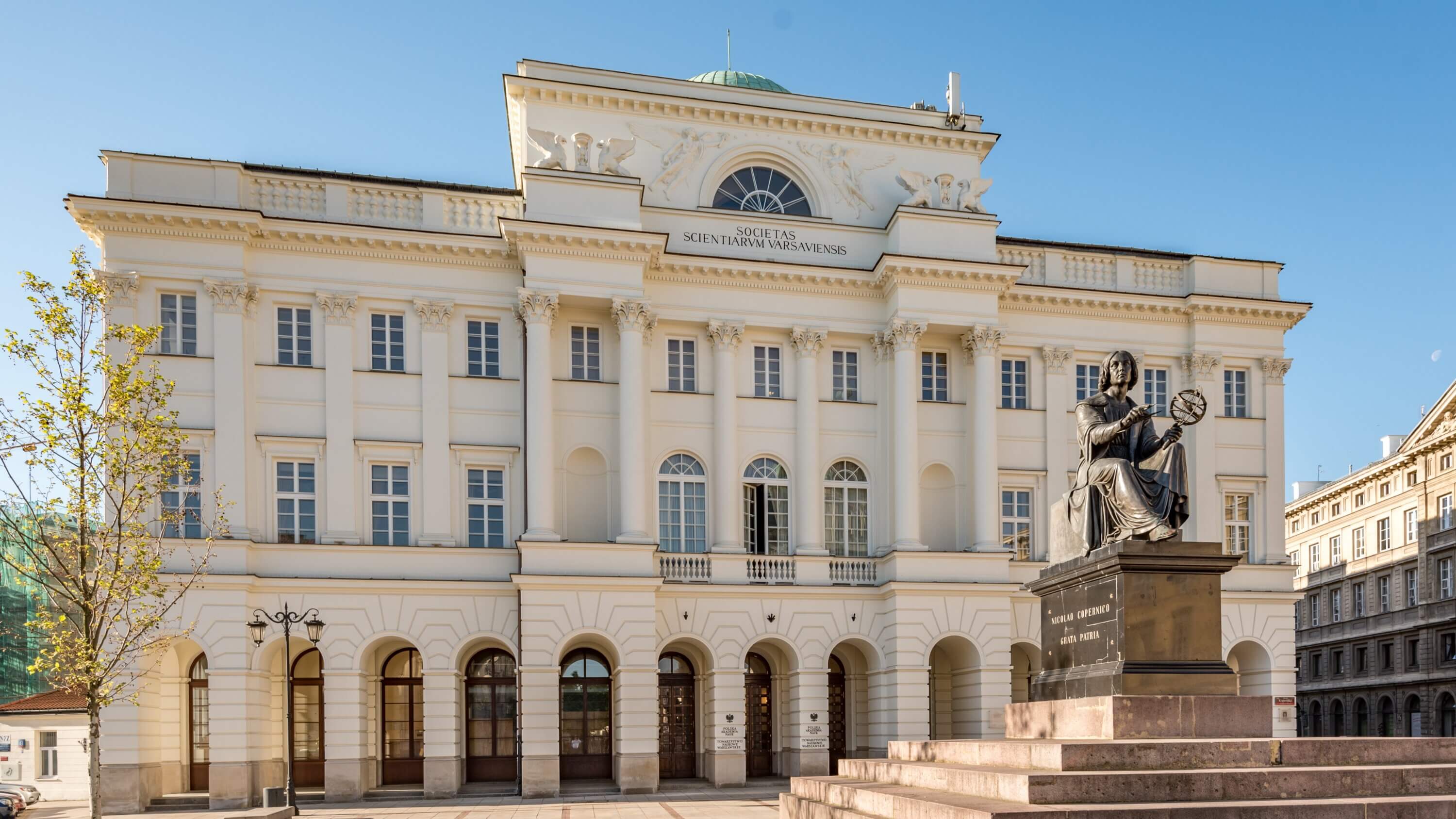
The period of the Polish People's Republic from 1945 to 1989 was a time of significant restoration and development of the country's scientific potential. Despite the colossal destruction after World War II and the loss of a considerable part of the intellectual elite, the socialist government placed its bets on education and fundamental research. State funding made it possible to create new infrastructure and to train generations of scientists who secured Poland a worthy place in world science. One of the most striking successes was in mathematics. The Polish school of mathematics, which had emerged before the war, maintained its positions thanks to such scholars as Kazimierz Kuratowski and Hugo Steinhaus. They developed topology and functional analysis — fields in which Polish researchers traditionally held leading positions. On July 1, 1952, the Polish Academy of Sciences was officially established; it coordinated research activities and united the country's leading institutes. This event became a turning point in the organization of scientific life and made it possible to centralize resources for solving complex problems. In the field of physics, the most important achievement was the development of nuclear research. In the town of Świerk near Warsaw, the Institute of Nuclear Research was founded, which became the largest center of physical science in the region. On June 19, 1958, the first Polish nuclear reactor, Ewa, was launched there, marking the country's entry into the club of states possessing atomic technology. Later, in 1974, the more powerful Maria reactor began operating, used for the production of radioisotopes for medical and industrial purposes. These facilities became the foundation for the development of energy and medicine for decades to come. Poland's space program also produced impressive results within the framework of cooperation with the countries of the socialist bloc. On June 27, 1978, cosmonaut Mirosław Hermaszewski went into orbit aboard the Soviet spacecraft Soyuz-30 as part of the Interkosmos program. He became the first and only Polish citizen in space, carrying out a number of scientific experiments. This flight demonstrated the country's technological capabilities and became a symbol of national prestige. Polish engineers also participated in the creation of equipment for Soviet and international space missions. In medicine, Polish scientists achieved serious successes in cardiac surgery and transplantology. Professor Jan Moll became a pioneer of research on artificial blood circulation and developed prototypes of artificial heart valves. In the 1960s, the first successful organ transplants were performed, saving the lives of many patients. The pharmaceutical industry also developed, providing the population with affordable medicines. The optical industry, represented by the enterprise PZO, produced high-quality microscopes and geodetic instruments, which were exported throughout the world. In the field of computer technology, Poland developed its own series of computers, such as ODRA and ZAM, in the 1950s and 1960s. Although they were inferior to their Western counterparts, their creation demonstrated the presence of qualified engineering personnel. Scientific centers in Warsaw, Kraków, and Wrocław became a forge of cadres for many branches of the economy. Despite the political restrictions and shortage of resources in the 1980s, the scientific community preserved a high level of competence. The legacy of the socialist period in science remains significant for modern Poland. Institutes created in those years continue to function, and the scientists trained then contributed to the country's development after 1989. On June 4, 1989, the first free elections took place, putting an end to the era of socialism, but the scientific base was preserved. The achievements of that time proved that even in difficult conditions it is possible to develop advanced technologies and fundamental knowledge.