1894 –
1930
Peru

José Carlos Mariátegui
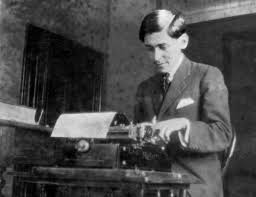
Jose Carlos Mariategui was born on June 14, 1894, in the Peruvian city of Moquegua into a family that soon faced financial hardship after the father's departure. His upbringing was handled by his mother, who had a tremendous influence on shaping his character and his aspiration toward justice. From an early age, Mariategui suffered from health problems, including a serious leg injury that accompanied him throughout his life and eventually led to amputation. Despite his physical ailments and lack of higher education, he began working as a journalist in Lima at an early age, where he quickly established himself as a gifted publicist and a sharp critic of social injustice. His early articles drew attention to the plight of the indigenous population and workers, which became the leitmotif of all his subsequent activity and intellectual pursuits.
In 1920, the military dictator Augusto Leguia ordered Mariategui's expulsion to Europe, which paradoxically contributed to the deepening of his political views and the broadening of his horizons. While in Italy, Germany, and France until 1923, he became a direct witness to the rise of fascism and the strengthening of the socialist movement after the October Revolution in Russia. It was in Europe that he finally shaped his Marxist convictions; however, he did not accept the dogmatic approach of the Second International, striving to find a path suited to Latin America. There he also met his future wife, Anna Chiappe, who supported him until his final days and helped preserve his archive. His return home in 1923 marked the beginning of the most productive period of his life, when theoretical inquiry merged with active political practice and the organization of the workers' movement.
Upon returning to Peru, Mariategui founded the journal "Amauta" in 1926, which became the main intellectual platform for left-wing forces across the continent. The publication brought together artists, writers, and politicians seeking to rethink Peruvian identity through the lens of socialism and indigenous culture. Mariategui insisted that solving Peru's problems was impossible without taking into account its centuries-long history and the traditions of indigenous peoples, rejecting the Eurocentric view of development. He criticized the liberal bourgeoisie for ignoring the indigenous question and believed that the emancipation of the peasantry was the key to a national revolution. The journal ran until 1930 and left a deep imprint on the cultural and political life of Latin America, becoming a symbol of intellectual resistance.
Mariategui's principal theoretical achievement was the book "Seven Interpretive Essays on Peruvian Reality," published in 1928. In this fundamental work, he formulated the concept of indigenous socialism, arguing that socialism in Peru should not be a blind copy of European models. The thinker argued that the ancient communal traditions of the Incas, known as ayllu, contained the seeds of collectivism that could be developed into a modern socialist system. For him, land reform was not merely an economic step but the restoration of historical justice and the foundation for building a new society. He believed that Latin American socialism must be a unique heroic creation, not an imitation, which made him one of the most original Marxists of his time.
In the field of political organization, Mariategui founded the Socialist Party of Peru in 1928, which was later transformed into the Communist Party. He also played a key role in creating the General Confederation of Workers of Peru, striving to unite workers and peasants into a single revolutionary force. However, his relations with the Comintern were strained, since the international communists demanded strict adherence to the Moscow line, while Mariategui insisted on autonomy and consideration of local specifics. Despite external pressure, he continued to develop his independent line, emphasizing the importance of the anti-imperialist struggle in the region. His organizational activity laid the foundation for the left-wing movement in Peru for decades to come, despite subsequent repressions.
Mariategui's health continually deteriorated, and he died on April 16, 1930, in Lima at the age of thirty-five. There is a version that the cause of death was poisoning or complications following amputation, but the exact causes remain a subject of historical debate. Despite his short life, his legacy proved enormous and outlived many regimes. Jose Carlos Mariategui is considered the father of Latin American Marxism, and his ideas continue to inspire social activists and politicians to this day. Even such radical groups as the Shining Path later tried to appropriate his name, although his humanistic and cultural approach differed greatly from their methods of terror. Today his works are studied worldwide as an example of the creative application of Marxism to the conditions of developing countries and the preservation of cultural identity.