GDR

Cars of the GDR
The Trabant became one of the symbols of the GDR. A small car with two doors and a plastic body. The first Trabant was produced in 1957 — the year the space age began. "Trabant" translates from German as "satellite." It was produced at the VEB Sachsenring plant (part of the IFA association), known for its trucks. It was conceived as a mass people's car and was a response to West Germany's "Beetle." The Trabant's home is Zwickau, where Audi and Horch cars were also produced before the war. The special body material — "Duroplast" — was chosen because of the shortage of rolled steel sheet. At the same time, the material lent itself well to molding.
The car was light and therefore very low-powered (18 horsepower). The two-stroke engine gave the car decent dynamics. The motor was so simple that servicing, repairing, and replacing it presented absolutely no difficulty. At the same time, the other solutions — front-wheel drive, independent suspension, rack-and-pinion steering — were very advanced for that time.
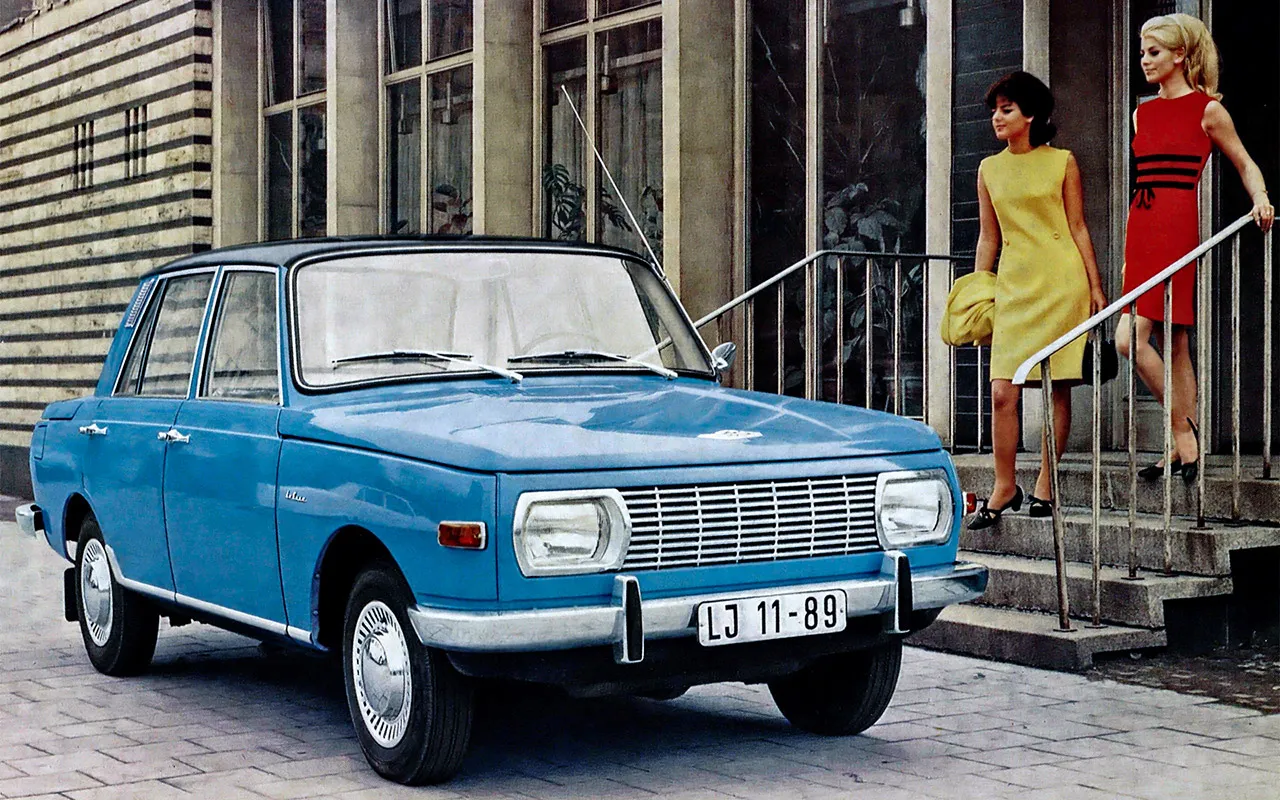
The Wartburg was the second mass-produced passenger car manufactured in the GDR. It was built at the plant in Eisenach, where BMWs had been made before the war. After the war, in the GDR, the plant continued to produce BMW cars. Because of the threat of sanctions for using the trademark, it was replaced with the EMW logo (Eisenach Motoren Werke). The Wartburg car (Wartburg 353) was produced for 26 years, until 1991, when at the insistence of the authorities of unified Germany the production of this brand was discontinued. The body was of unitary construction with a front subframe, which simplified repair. The car had front-wheel drive, which was a leading-edge solution for cars of this class in the 1960s.