1928 –
1967
Cuba

Che Guevara
On June 12, 1955, the underground "Movement of the 26th of July" was established, headed by Fidel Castro. In July 1955, in order to prepare an armed uprising in Cuba, he went to Mexico, where he met the Argentine Ernesto Guevara.
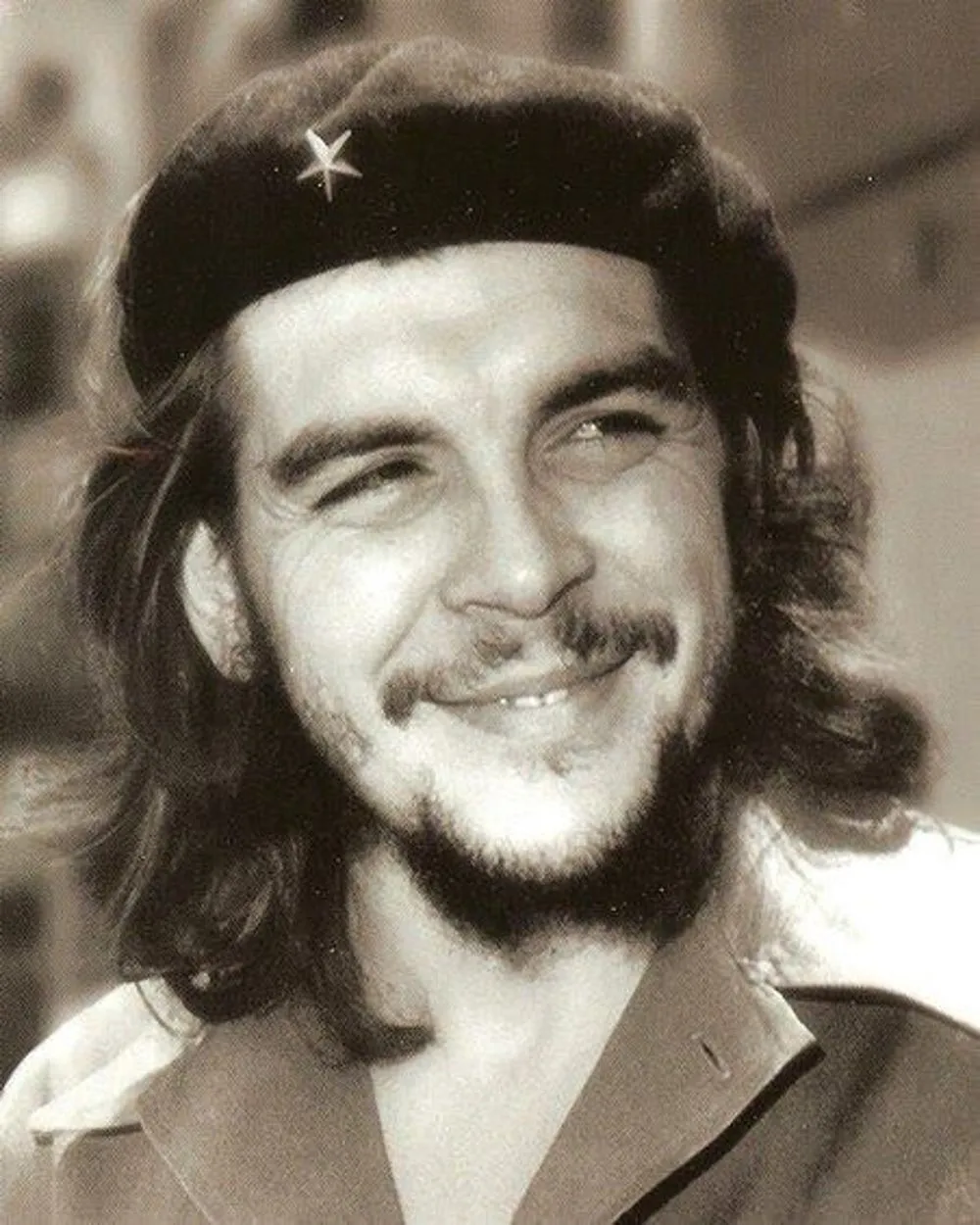
Ernesto Guevara (1928–1967) was born on June 14, 1928, in the Argentine city of Rosario, into the family of an architect of Irish descent. The future revolutionary's father sympathized with leftist forces and had a great deal of contact with the Spanish republicans living in Argentina who had left Spain after defeat in the war with the Francoists. From childhood, Ernesto was haunted by bronchial asthma. Despite his illness, he engaged in sports. He was also very fond of reading and studied the works of philosophers and politicians — Marx, Engels, Lenin, Kropotkin, Bakunin. Guevara loved chess and, it is said, became interested in Cuba thanks to it, since one of the world's most famous chess players was the Cuban José Raúl Capablanca.
In 1946 he entered the medical faculty of the National University in Buenos Aires. As a sailor on a vessel in 1951 he visited British Guiana (since 1966 — Guyana) and Trinidad. In 1952 and 1954 he made two journeys through Latin America. In 1954, in Guatemala, Ernesto Guevara joined the supporters of President Jacobo Árbenz, who sought to limit the interests of American monopolies by nationalizing the lands of the American United Fruit Company. Árbenz was overthrown as a result of a coup organized by the CIA. Ernesto Guevara left for Mexico, where he worked for two years as a doctor in a hospital. It was in Mexico that he met Fidel Castro, who was preparing a revolutionary uprising in Cuba. Later Fidel admitted that the Argentine Guevara made a strong impression on him. While Castro himself at that time did not hold a clear political position, Guevara was a convinced Marxist who knew how to defend his views in the most complex discussion.
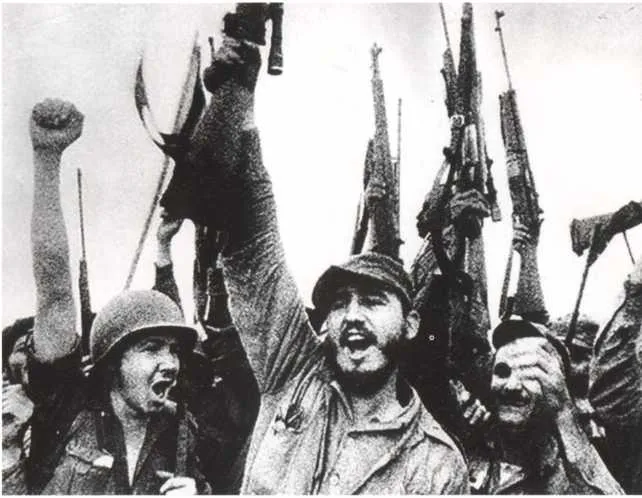
In December 1956, he took part in the landing on the yacht "Granma" together with Fidel Castro and Camilo Cienfuegos. The history of this landing is tragic. Of the 82 members of the group, the majority perished, and the small remaining detachment managed to take refuge in the Sierra Maestra mountains. But it was from this moment that the Cuban revolution began, ending in victory in January 1959. Ernesto Guevara was given the nickname "Che" because of his habit of using this word in his speech.
After the victory of the Cuban Revolution, Che Guevara became president of the National Bank of Cuba and then minister of industry. Intelligent, educated, and erudite, he proved himself in these posts as a competent professional who delved thoroughly into the intricacies of the work entrusted to him. But he lacked the romance of revolutionary struggle. In April 1965, Che Guevara, well-known and popular in Cuba, left all his posts and went to Africa, where he joined the revolutionary struggle in the Congo. However, due to internal disagreements with the local revolutionaries, he set off for Bolivia, where at the head of a guerrilla detachment in 1966 he began the struggle against the local pro-American regime.
He failed to take into account a number of factors. The local population did not particularly support the guerrillas, and the Bolivian authorities, frightened by the appearance among them of such an iconic figure, requested help from the Americans. CIA special agents and detachments from Latin American countries with dictatorial regimes were brought into Bolivia. The CIA actively searched for the location of the National Liberation Army of Bolivia — under just such a name Guevara's detachment operated. Having received information from its agent, the Bolivian special forces surrounded the camp and attacked. Che Guevara was wounded and taken prisoner. To this day, it is unknown which member of Bolivia's leadership gave the order for the execution. Che Guevara's hands were amputated as material evidence of his murder.
Che Guevara's death turned him into a cult figure for the local inhabitants, who at first had been wary of him. The National Liberation Army of Bolivia continued resistance, and in 1978 its members were able to move to legal political struggle. In October 1997, the remains of Che and his comrades were transported to Cuba and ceremonially buried in the mausoleum of the city of Santa Clara, where Guevara's detachment had won one of its largest victories during the years of the Cuban Revolution.