1920 –
present
Syria

Syrian independence
On March 8, 1920, Syria proclaimed its independence from the collapsed Ottoman Empire, and Emir Faisal ibn Hussein — a hero of the Arab liberation movement — became head of state. Under his leadership in 1918, the Arab army, which had launched an uprising with the support of the Entente powers, captured Damascus. However, the independence proved short-lived. As early as June 1920, the Arab Kingdom of Syria was abolished by French troops. Faisal himself moved to neighboring Iraq, where he subsequently became King Faisal I. Under his rule, Iraq gained official independence in 1932, whereas Syria's fate turned out differently, falling under foreign administration.
From 1920, Syria became a French colony, part of the post-war plan for dividing the world codified in the secret Sykes-Picot Agreement. France received a mandate to govern Syria and Lebanon, while Great Britain received Iraq and Jordan. The French divided Syria into six parts — the states of Damascus, Aleppo, the Alawites, the Druze, Greater Lebanon, and the Province of Alexandretta. Such fragmentation weakened national unity and complicated governance. In 1938, the Province of Alexandretta became the State of Hatay and was incorporated into the Republic of Turkey, which was a painful loss for Syria. The State of Lebanon became independent Lebanon in 1946, permanently separating from the Syrian political space.
On April 17, 1946, largely thanks to the efforts of the USSR, French and British troops were finally withdrawn from Syrian territory. This day is celebrated as Syria's Independence Day. Since troops were also withdrawn from Lebanese territory, this day is a holiday in that country as well. However, gaining sovereignty did not bring stability. From 1949 to 1970, Syria experienced a series of coups d'etat, which indicated a deep political crisis and instability of state institutions.
In the second half of the 1940s, parties and governments linked to national and international capital held power. However, in April 1947, a new political force emerged in the country — the Arab Socialist Ba'ath Party. It declared itself a "nationalist, popular, socialist, revolutionary, political" party advocating social reforms and the nationalization of key industries. In inter-Arab relations, the Ba'ath called for the unification of all Arab countries within a single indivisible "Arab homeland." Michel Aflaq, the ideologue and founder of the party, was elected its Secretary General. Unlike other political parties, the Ba'ath from the very beginning declared itself a pan-Arab leadership center and organized its regional sections in other Arab countries, influencing the politics of the entire region.
In 1958, Syria attempted to unite with Egypt, resulting in the creation of the United Arab Republic (UAR). This marked the peak of pan-Arabism. However, the union proved short-lived. In 1961, another military coup took place in Syria, and the country withdrew from the UAR, demonstrating the difficulty of realizing the idea of unity in practice.
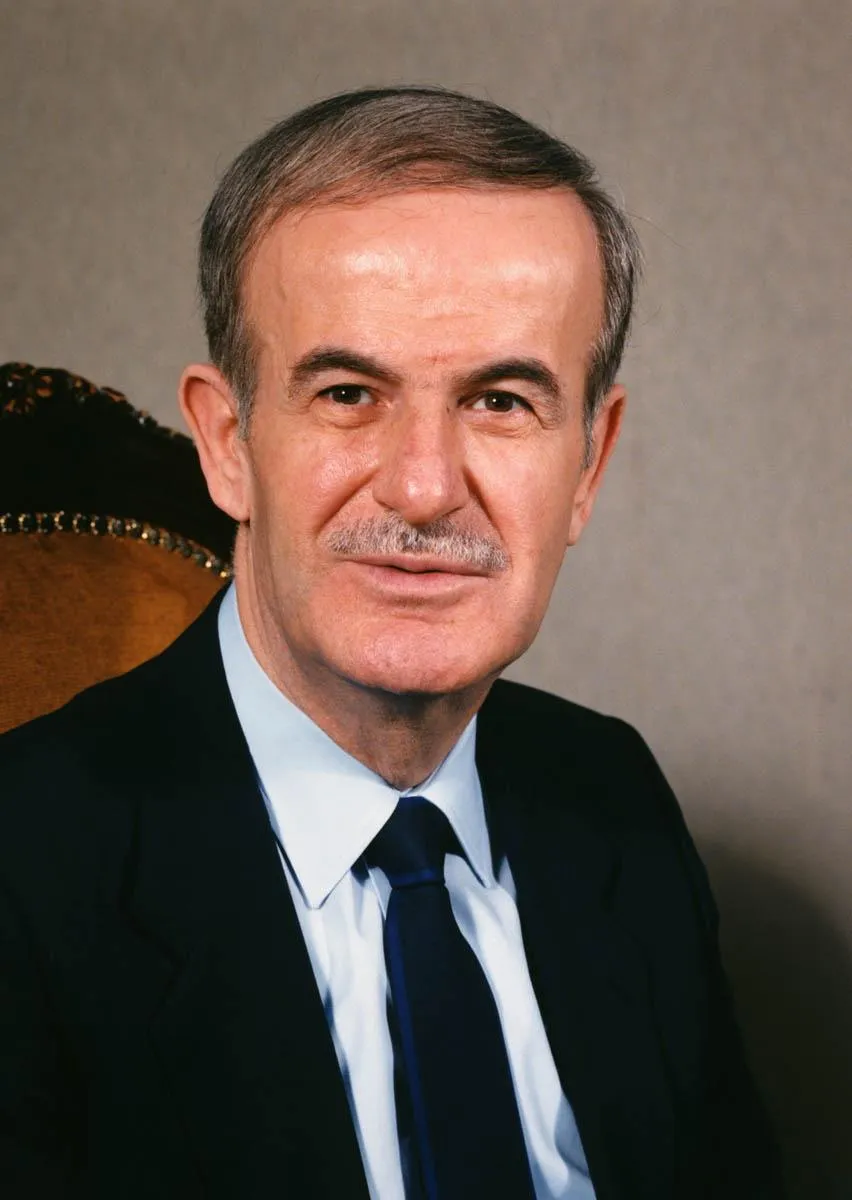
As a result of the March Revolution of 1963, the Arab Socialist Ba'ath Party came to power in Syria. One of the participants in the March Revolution was Hafez al-Assad, at that time the commander of the country's Air Force. The revolution was bloodless, but a struggle between various factions for influence immediately began within the party. As a result of the coup on February 23, 1966, the military wing of the party, the so-called "February 23 Movement," came to power. The new generation of Ba'athists declared the elimination of feudal and capitalist relations as the goal of domestic policy, and the resolution of the Palestinian problem as the goal of foreign policy. A new war with Israel was announced, which began on June 5, 1967, and went down in history as the "Six-Day War." Egypt, Syria, and Jordan were defeated by the Israeli army. Israel occupied the Sinai Peninsula and the Syrian Golan Heights, which became a strategic catastrophe for Damascus and the loss of crucial defense positions.
After the defeat, internal contradictions intensified in Syria. In 1969, Israeli aviation bombed Palestinian camps near Damascus. In September 1970, Syria conducted a failed military operation in Jordan, attempting to support an uprising of Palestinian refugees. The blame was placed on Hafez al-Assad, who was the Minister of Defense. However, as a result, Hafez al-Assad and his supporters carried out a seizure of power in Syria on November 13, 1970, known as the "Corrective Movement."
After coming to power in 1970, Hafez al-Assad made the proclamation of a new political doctrine — based on the historical experience of state transformations of socialist bloc countries — the foundation of socio-economic reforms. Under conditions of extremely high militarization of the country's budget, Assad proceeded with the privatization of the economy, liberalization of trade with other countries, and relaxation of entry and exit regulations. Only large and strategic enterprises remained in state ownership. Free economic zones were created to attract foreign investment, and large agricultural estates were preserved. Only Israeli capital and goods remained prohibited.
The rule of Hafez al-Assad was complex and contradictory. In 1973, Syria and Egypt made another attempt at war with Israel to reclaim territories previously seized by Israel. It again proved a strategic failure, and within 18 days the Arab forces were once again defeated, although initial success had been achieved. Clashes continued until 1974. In 1975, the war in Lebanon began, where Syria played a key role. Within the country, sectarian opposition intensified, including terrorist attacks against the Alawites — of whom Assad was a representative — by the Sunni "Muslim Brotherhood," whose historical base was the city of Hama. This confrontation resulted in brutal clashes and repression.
On June 10, 2000, Hafez al-Assad passed away. The 20th century for Syria ended with his death. His legacy shaped the country's political landscape for decades ahead, cementing an authoritarian model of governance and Syria's role as a key player in the Middle East, despite all the external and internal challenges the state faced at the end of the last century. Power passed to his son, ensuring continuity of course, but it did not resolve the accumulated social and political problems that remain relevant in the modern world