1960 –
1994
South Africa

South African independence
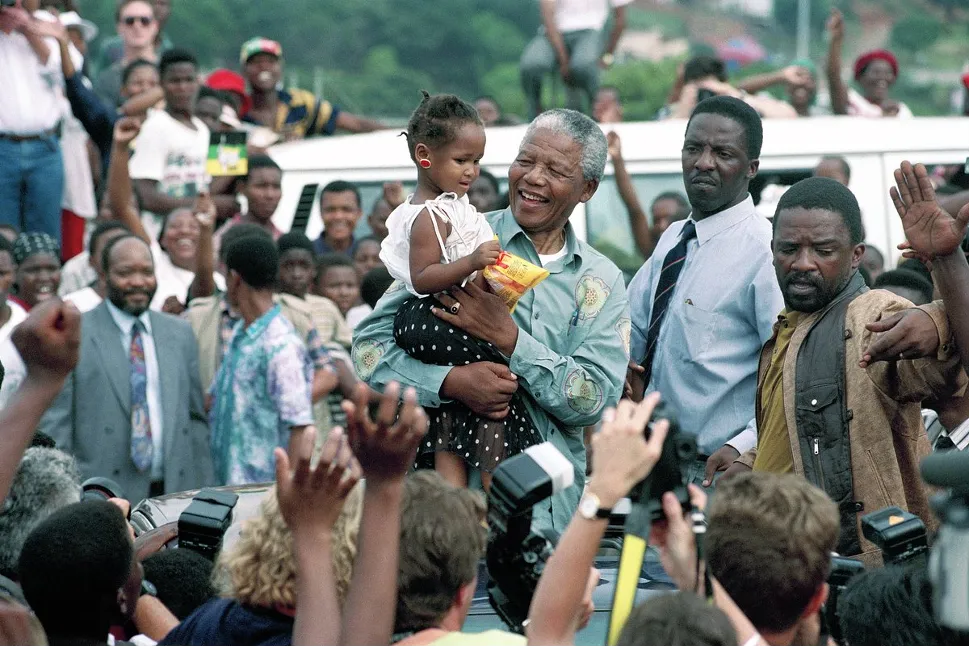
The Republic of South Africa represents a unique case in African history, where the struggle for independence was transformed into a long struggle against the apartheid regime within an already formally independent state. While other countries struggled against the European metropoles, the black population of South Africa stood up against an internal regime of racial segregation, supported by the white minority. The African National Congress (ANC), founded back in 1912, became the main force of resistance. Nelson Mandela became the first black president only in 1994, after the ANC's victory in the elections. However, the path to this was long and bloody.
Initially Mandela practiced the tactics of non-violent resistance in the spirit of Mahatma Gandhi, but after the shooting of the demonstration in Sharpeville in 1960, when 69 people were killed, the activities of the ANC were banned, and Mandela headed the armed wing "Umkhonto we Sizwe" ("Spear of the Nation"). He was accused of sabotage and conspiracy against the state, which was aggravated by his ties with the South African Communist Party. Mandela spent 27 years in prison, becoming a symbol of struggle throughout the world. The USSR provided significant moral and material support to the ANC, recognizing it as the sole legitimate representative of the people, while Western countries often hesitated due to economic interests.
Mandela's release in 1990 and the subsequent negotiations led to democratic elections in 1994. Having become president, Mandela carried out socially oriented reforms but retained a market economy for stability. An important role was played by Archbishop Desmond Tutu, who chaired the Truth and Reconciliation Commission. His approach, based on forgiveness and restorative justice, made it possible to avoid a full-scale civil war during the transfer of power. Tutu, who in the early 1970s worked in Lesotho and later became one of the leaders of the resistance inside the country, became the voice of the conscience of the nation. South Africa became an example of a peaceful transition to majority rule, although the problems of economic inequality, the legacy of apartheid, and social injustice remain relevant to this day. The struggle in South Africa showed that decolonization is not only formal sovereignty but also a profound social transformation of society.