1920 –
2010
Mongolia

Mongolian People's Revolutionary Party
In the 17th century, the territory of present-day Mongolia became part of the Qing Empire. After the Manchu conquest in 1691, Outer Mongolia became an autonomous part of the Chinese empire, retaining internal self-government under the control of Qing ambans. This period lasted more than two centuries and had a profound influence on the social structure of Mongolian society.
Mongolia proclaimed independence on December 1, 1911, taking advantage of the Xinhai Revolution in China, which led to the fall of the Qing dynasty. The Bogd Gegeen was elected as a theocratic monarch. International recognition, however, was difficult: under the Kyakhta Treaty of 1915, signed by Mongolia, China, and Russia, the country was recognized as an autonomous part of China under a Russian protectorate. In 1919, against the backdrop of the Russian Civil War, Chinese troops abolished the autonomy and occupied Urga.
The situation changed in 1920–1921. White Guard units under the command of Baron Roman von Ungern-Sternberg entered Mongolia from Russian Transbaikalia. In February 1921, his Asiatic Cavalry Division drove the Chinese garrisons out of the capital, but Ungern's regime turned out to be extremely brutal and terroristic. In response to this, the revolutionary forces of Mongolia united with Soviet Russia.
In the summer of 1921, units of the Red Army and Mongolian partisan detachments inflicted defeat on Ungern's troops. On July 11, 1921, people's power was proclaimed, although the monarchy was formally retained until 1924. A key role in these events was played by the Mongolian People's Party (MPP), founded in 1920. In 1924, after the death of the religious leader Bogd Khan, the Mongolian People's Republic (MPR) was proclaimed, and the capital Urga was renamed Ulaanbaatar ("Red Hero"). The MPR became the second socialist state in the world.
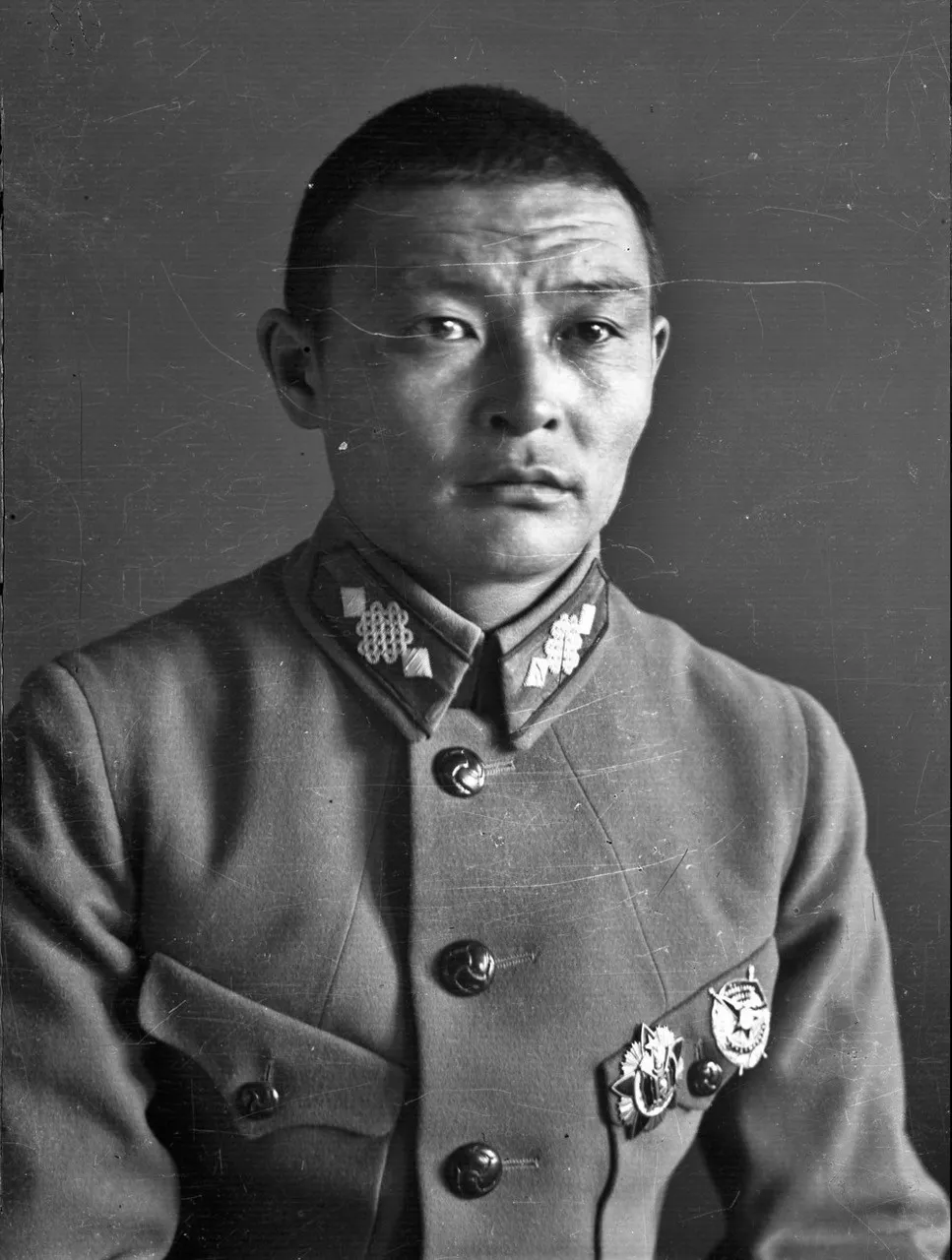
One of the central figures of the revolution was Damdin Sükhbaatar (1893–1923) — a Mongolian revolutionary, statesman, and military leader. He led the partisan movement and became commander-in-chief of the revolutionary troops. The title "Baatar," which in Mongolian means "hero" or "champion," was conferred upon him for his personal courage. Together with his comrades-in-arms, Sükhbaatar built up the army that fought against the interventionists. In October 1921 he led the Mongolian delegation to Moscow, where he was received by V. I. Lenin. On November 5, 1921, Sükhbaatar signed a Soviet-Mongolian treaty on establishing friendly relations. For his services in the struggle against White Guard detachments, he was awarded the Soviet Order of the Red Banner. Sükhbaatar died unexpectedly on February 22, 1923, in Urga, not living to see the renaming of the capital.
Another prominent figure of the era was Khorloogiin Choibalsan (1895–1952). He was one of the participants in the revolutionary movement, but his rise occurred later. After Sükhbaatar's death and the subsequent purge of the party ranks in the 1930s, Choibalsan became the country's sole leader. His rule is characterized by large-scale socialist transformations, industrialization, and the elimination of illiteracy, but also by harsh repressions against the clergy and political opposition, known as the "Great Terror" in Mongolia. Choibalsan left an ambiguous mark on history, combining the role of modernizer of the country with the role of conductor of Stalinist policy.
The history of Mongolia in the first half of the 20th century demonstrates the complex path of transition from a feudal theocracy to a socialist state. Despite external dependence on the USSR, the country was able to preserve its national identity and territorial integrity. The legacy of the revolutionaries of 1921, especially Sükhbaatar, remains fundamental for modern Mongolian statehood, symbolizing the aspiration to independence and national renaissance.