Италия
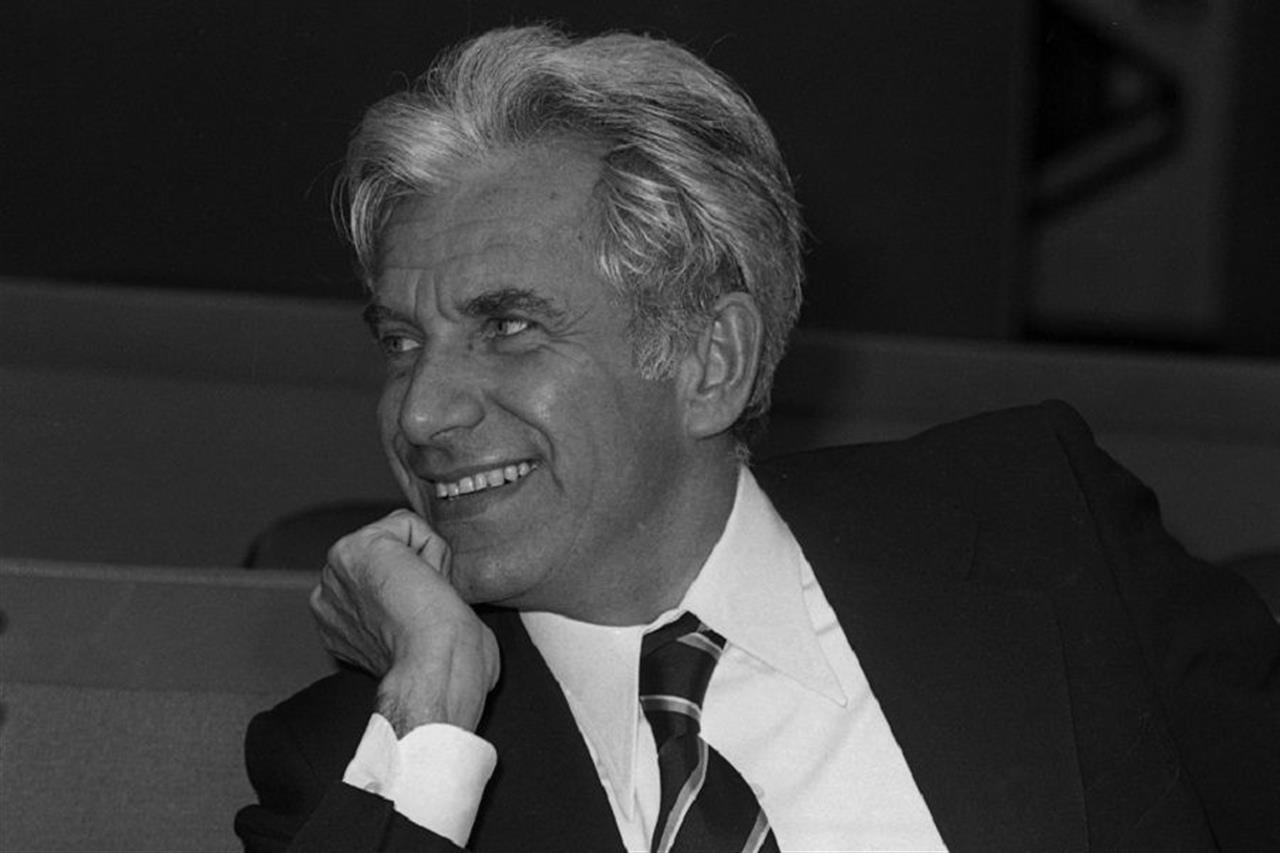
Lucio Magri
At the end of November 2011, Lucio Magri passed away — one of the most significant intellectuals and politicians of the Italian communist movement, a journalist, and co-founder of Il manifesto. He made the decision to undergo euthanasia at a clinic in Zurich, convinced that his historical mission was complete and that he had nothing more to say to the world.
His last book, The Tailor of Ulm (Il sarto di Ulm), was published in 2009 (Italian edition) and became a kind of political testament. It is not merely a historical chronicle, but a profound analysis of the trajectory of Italian communism, representing the quintessence of the author's life and reflections on the debates that erupted after the fall of the Berlin Wall in 1989–1990. The central question of that time sounded unequivocal: "Is it all over?"
Magri maintained a cautious yet firm historical optimism in his assessment of the twentieth-century communist experiment. In the preface to the English publication of excerpts from the book (journal New Left Review, vol. 51, 2008), he recalls a pivotal moment in the history of the Italian Communist Party (PCI). At the 1991 congress, where the fate of the party was being decided and the question of removing the word "communist" from its name was on the table (resulting in the PCI being transformed into the Democratic Party of the Left), party veteran Pietro Ingrao, expressing disagreement with the majority, appealed to Bertolt Brecht's famous parable of the tailor of Ulm.
The Allegory of Flight
Ingrao and Magri used Brecht's allegory to convey the following idea: the collapse of the twentieth-century communist regimes does not signify the bankruptcy of the communist idea as such. Even if at that time — and today — the opposite opinion prevailed, this merely repeats the situation of the medieval tailor. Back then, society was convinced that humans could not fly, since the tailor's attempt ended in death. However, subsequent history proved this conclusion wrong.
The Relevance of Magri's Legacy
If today it makes sense to revisit Magri's texts, it is to understand what arguments he would use to confirm his historical optimism. It is important to evaluate not only the path that led to what he considered a temporary defeat, but also the processes that unfolded after his death, as well as the challenges facing the left movement now.
Magri himself prompted these reflections in the farewell note he left before departing this life. This document became a final lesson in political ethics:
"I am a living private archive. For a person of advanced age, isolation may carry a certain dignity. But for a communist, isolation is the gravest sin. The 'Last of the Mohicans' may remain a mythical figure, but a solitary communist, an 'angry old man,' risks becoming a laughingstock if he fails to step aside in time.
It is not true that the past — of communists or anyone else — was predetermined. Nor is it true that the future lies entirely in the hands of the youth who will come to replace us.
The 'old mole' digs the earth, but, being blind, it does not know where it came from or where it is heading. It may even dig in circles. And those who did not believe and never will believe in Divine Providence must do everything possible to understand it and help it find its way."
Context and Symbols
In this note, Magri masterfully intertwines personal motives with Marxist theory. The image of the "old mole" is a direct reference to Karl Marx, who in The Eighteenth Brumaire of Louis Bonaparte quoted Shakespeare, calling revolution an "old mole" that secretly burrows through history. Magri emphasizes: the revolutionary process is nonlinear, it may lose its way, but it does not come to a halt.
The refusal of the role of the "angry old man" is an act of responsibility. Magri understood that dogmatic clinging to the past discredits the idea more than an honest departure does.
Bertolt Brecht's Parable "The Tailor of Ulm"
The tailor said to the bishop: — Believe me, I know how to fly. Watch, I will try. And he stood with a device That seemed like wings, On the roof of the great cathedral. — This is utter absurdity, A wicked, stupid lie, For man will never fly. Man is not a bird, — Said the bishop to the tailor.
The people said to the bishop: — The tailor is dead. He was a fool. His wings are crumpled, And he lies motionless On the hard church square. The bells ring in glory of the fact That man is not a bird. It was a wicked, stupid lie, Humanity will never fly, — Said the bishop to the people.
(But history knows: humanity took flight.)
Conclusion
Lucio Magri left behind a question that remains open: how to preserve faith in the possibility of social emancipation while acknowledging the mistakes of the past? His departure was not an admission of defeat, but a final act of consistency with his own biography. For contemporary left movements, his legacy serves as a reminder: the failure of an attempt does not prove the impossibility of the goal, and isolation from the living process of history turns ideology into dogma. The Tailor of Ulm crashed, but humanity mastered the skies — and therein lies the essence of Magri's optimism.
No comments yet. Be the first.