1958
Guinea

Independence of Guinea
Guinea occupies a unique place in the history of the decolonization of French Africa, having become the first French colony to gain independence through a decisive refusal to cooperate with the metropole.
In September 1958, French President Charles de Gaulle offered the colonies a referendum on joining the French Community, which implied retaining Paris's control over defense and foreign policy. The only territory that voted against was Guinea, under the leadership of the Democratic Party of Guinea headed by Ahmed Sékou Touré. His famous phrase "We prefer poverty in freedom to wealth in slavery" became the motto of the era.
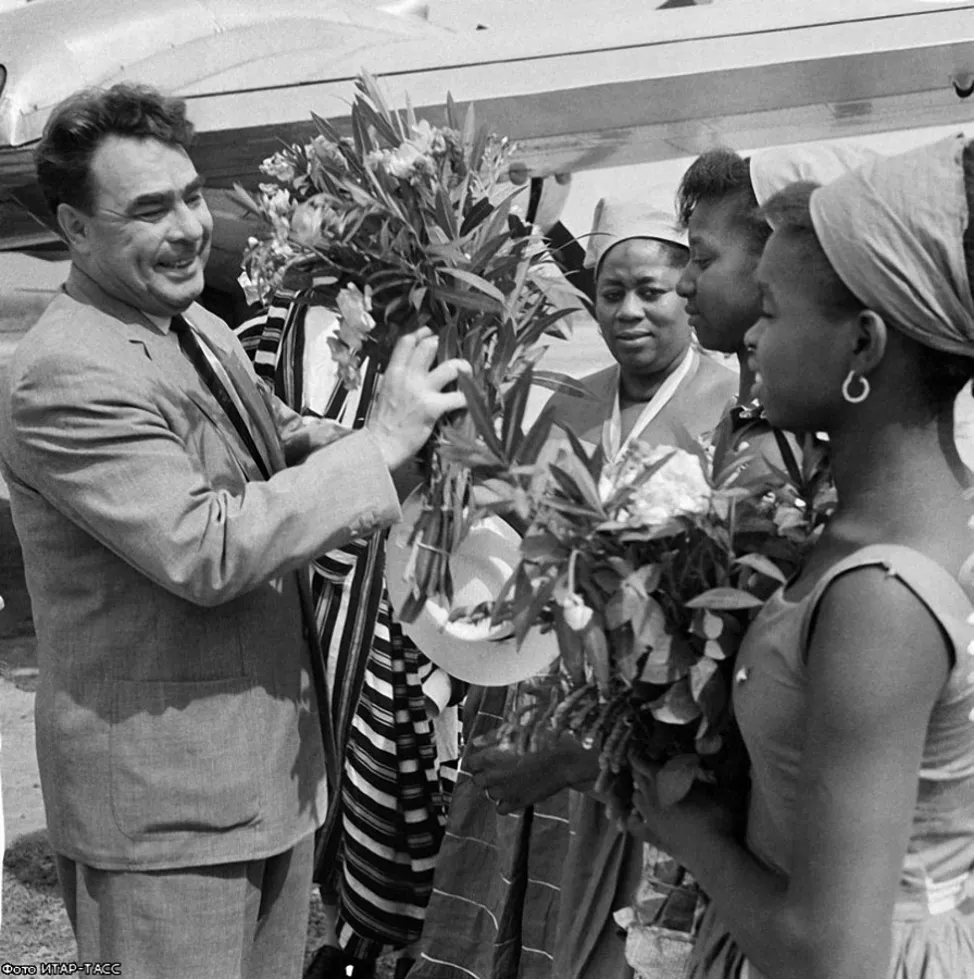
Independence was proclaimed immediately (October 2, 1958), which entailed an economic blockade by France, which removed even telephones and medical supplies. Under these conditions, Guinea turned to the Soviet Union for help. Sékou Touré maintained close relations with the USSR, visiting Moscow in 1965 and meeting there with Anastas Mikoyan and Leonid Brezhnev. The Soviet Union provided the country with assistance as part of its support for the socialist path of development, seeing in Guinea an example of decisive anti-imperialism. This cooperation included economic credits, technical aid, and the training of personnel. However, Sékou Touré's domestic policy was marked by authoritarianism and repression against the opposition, which over time weakened the country.
Nevertheless, Guinea's choice in 1958 became a catalyst for other French colonies, demonstrating that full sovereignty was possible. In 1960, when France was forced to grant independence to its remaining colonies, Guinea already held the status of a sovereign state, which strengthened its authority on the continent. Sékou Touré's legacy remains contradictory: on the one hand, he is the father of national independence; on the other, his regime left a heavy economic mark. Relations with the USSR fluctuated, but the strategic partnership during the Cold War years allowed Guinea to maintain an independent foreign policy course without falling into complete dependence on its former metropole.