1957
Ghana

Independence of Ghana
The story of Ghana's attainment of independence is one of the most striking examples of a successful national liberation movement in Africa.
A former British colony called the Gold Coast, it proclaimed its independence in March 1957, becoming the first state in the region south of the Sahara to emerge from under colonial rule. This event had colossal symbolic significance for the entire continent, giving a powerful impulse to decolonization. The leader of the movement and the country's first prime minister, and later president, was Kwame Nkrumah, a charismatic politician who combined the ideas of Pan-Africanism and socialism.
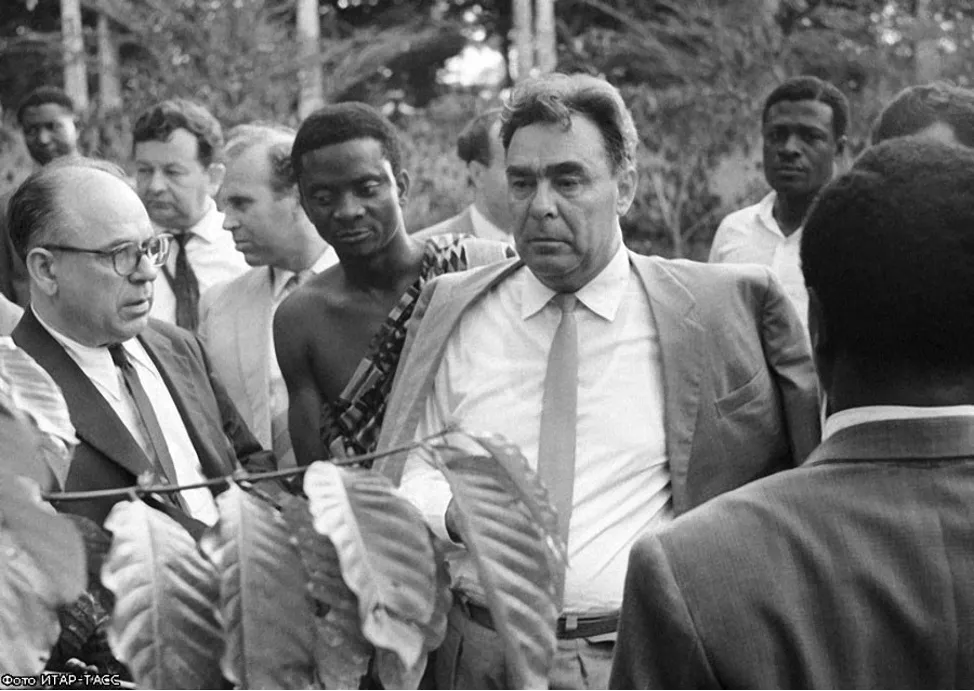
Nkrumah described himself as a Christian by religious confession, but a Marxist socialist by political views, reinterpreting these ideologies for the tasks of African liberation. His basic idea was the consolidation of African countries under a single continental and socialist leadership. The USSR actively supported Ghana, seeing in it a foothold for the spread of socialism in Africa.
However, the internal economic crisis, Nkrumah's authoritarian methods of rule, and external pressure led to a military coup in 1966, when Nkrumah was on a visit to China and Vietnam. Despite this, Nkrumah's legacy as the father of African independence remains unshakable. Ghana became an example of how political will and international support could lead to sovereignty, but also demonstrated the difficulties of building statehood at the postcolonial stage. In the subsequent years the country experienced a series of coups and returns to civilian rule, but its status as a pioneer of independence has secured for it a special place in the history of African unity. Relations with the Soviet Union fluctuated depending on the political course of the ruling juntas, but the cultural and educational ties laid down in the 1950s and 1960s, including the education of Ghanaian students at higher educational institutions of the USSR, have left a deep mark on the history of both states.