1946 –
1990
Bulgaria

Made in Bulgaria
Bulgaria's production encompassed a wide range of goods that were actively exported to all countries of the socialist bloc.
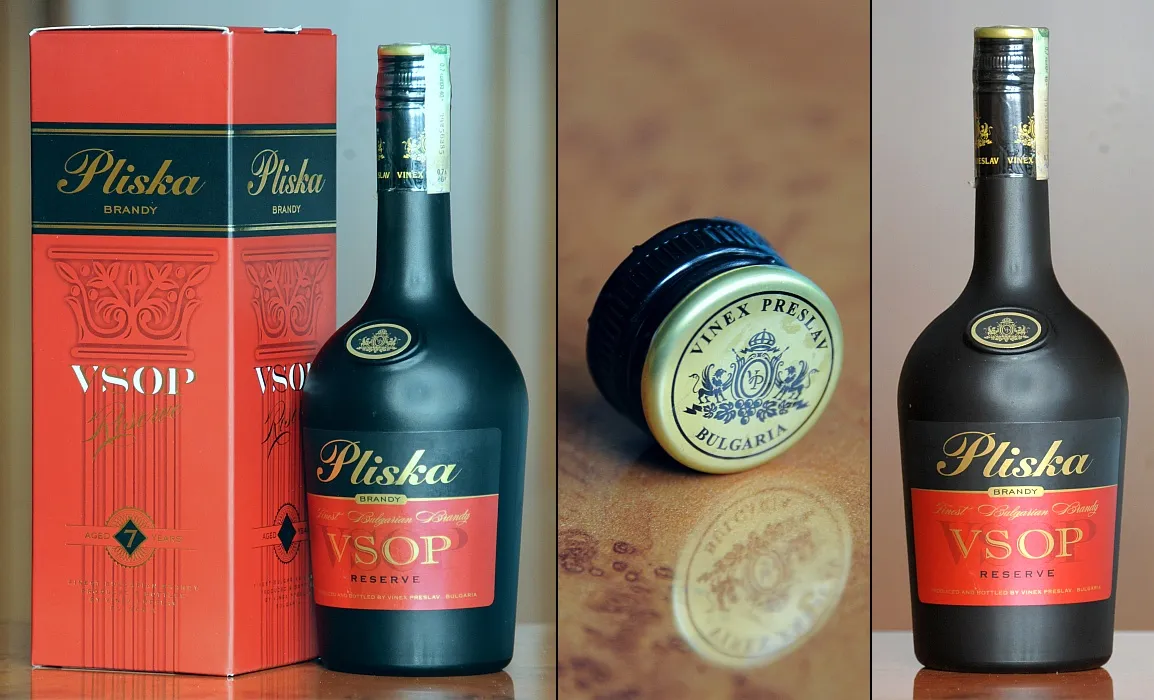
The strong spirits Pliska and Slanchev Bryag (Sunny Beach) were very popular in the CMEA countries, and the term "Bulgarian pepper" firmly entered the gastronomic vocabulary of the residents of Eastern Europe. Many Bulgarians call Pliska a "cognac," and Slanchev Bryag a brandy. "Slanchev Bryag" is a Bulgarian brandy that first appeared on the alcohol market in 1976 but remains popular to this day. The drink is produced on the basis of selected spirits obtained from grapes of the Dimyat, Ugni Blanc, and Rkatsiteli varieties, which mature in small oak casks for at least 3 years. Pliska brandy first appeared on the market in 1953. In the USSR, the drink became a popular brand and received 45 medals for its high quality. The drink is produced according to classical cognac technology. Three varieties of white grape are used for the distillate: Dimiat (an autochthonous Bulgarian variety), Trebbiano (also known as Ugni Blanc, Saint-Émilion), and Rkatsiteli (a Georgian variety).
Bulgaria supplied the USSR not only with sweet pepper as a product, but also with the seeds of high-yielding varieties. The phrase "Bulgarian pepper" or "paprika" acquired a firm meaning, although pepper of this variety was bred in Mexico and cultivated in Spain. From Bulgaria, wine, cigarettes, toothpaste, cosmetics and perfumery, and fruit and vegetable products were supplied to the USSR market. An amusing story is connected with the supply to the USSR of a hand-held electric angle grinder, which was produced at an enterprise in Bulgaria and therefore received in the Soviet Union the colloquial name "bolgarka," which is still used in everyday speech by citizens to this day.
In 2018, the Bulgarian oil-bearing Damask rose (Rosa damascena) was declared part of the world intangible and cultural heritage of UNESCO. One of the rarest products of the Bulgarian economy brings world fame to the country. The raw material for rose oil is the rose of the Rosa Damascena species, blossoming with dark-pink flowers. It is one of the few among 25,000 known rose species that can be used for industrial purposes. Since the 17th century, roses have been widespread in the area of the "Rose Valley," which is located to the south of the Balkan Mountains (the Karlovo-Kazanlak region). Around Kazanlak stretch huge plantations of roses, which the residents of the nearby villages cultivate and harvest. Here are ideal conditions for roses; the territory is protected from the cold northern winds by the Balkan Mountains. At present, rose oil is finding ever wider application in pharmacology and medicine, particularly in dentistry.