1946 –
1974
Argentina

Argentina's Golden Age
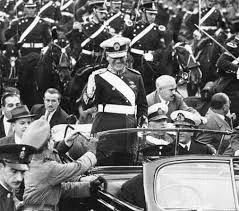
Argentina's "Golden Age" is associated with the name of Juan Domingo Perón, when 10% of the population of Latin America produced 25% of its industrial output and exports, and the vaults of the Central Bank of Argentina were packed to capacity with gold. Perón offered Argentinians neither communism, fascism, nor capitalism, but justicialism. A brilliant orator and demagogue, he declared himself the defender of the destitute.
Justicialism represents a political ideology inextricably linked with the activities of President Perón, which is why these concepts are often perceived as synonyms. At the heart of this doctrine lie three fundamental principles, known as the three banners of Peronism, which include social justice, economic independence, and national sovereignty. Its ideologues positioned justicialism as a third position, offering an alternative to both liberal capitalism and Marxist communism, striving to combine the best features of both systems without their extremes. A key role in this conception is assigned to the state, which acts as arbiter between labor and capital, ensuring a balance of interests for the common good of the nation. Despite the decades that have passed, this ideology remains the foundation of one of the most influential political movements in Latin America and continues to exert a substantial influence on the contemporary politics of Argentina.
Juan Domingo Perón was president of Argentina from 1946 to 1955 and from 1973 to 1974. In September 1955 he was overthrown as a result of a military revolt and emigrated to Spain; in 1973 he returned to power, having won the presidential elections. He died in 1974.
Perón carried out the nationalization of part of the railway network and of the telephone companies, of the credit and banking system, and of foreign trade. He adopted a Workers' Rights Code, providing for broad social protection of the working people, established a University for Workers, and equalized women with men in civil rights.