1961 –
2002
Angola

Independence of Angola
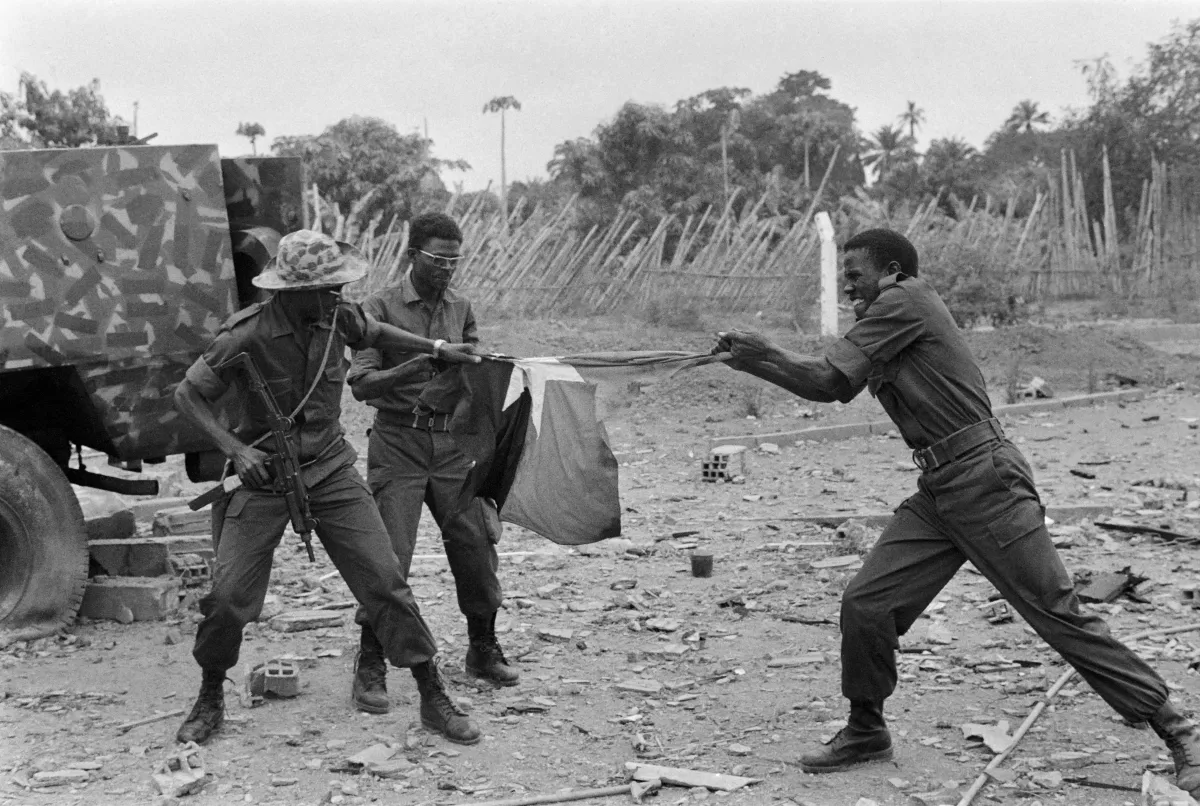
Angola represents an example of a prolonged armed struggle for independence, which dragged on for a decade and a half after the formal beginning of decolonization in other countries (1961-1975).
The country was a colony of Portugal, which held its African possessions longer than any other European power. The liberation movement was led by the MPLA (People's Movement for the Liberation of Angola), where a key role was played by Antonio Agostinho Neto (subsequently the first president of the independent People's Republic of Angola).
Angola gained independence in 1975, but immediately plunged into a civil war, in which South Africa and the USA intervened, supporting opposition groups against the MPLA government. The USSR provided significant support to Neto's legitimate government, supplying weapons and sending military advisers, including a Cuban contingent. Angola's socialist choice was conditioned not only by ideology but also by the necessity of defending sovereignty against external aggression. Neto's death in 1979 coincided with the continuation of the conflict, which ended only in 2002.
The history of Angola demonstrates how the struggle for independence was replaced by a civil war, aggravated by the interference of superpowers in an internal conflict. Since peace came only in 2002, the country has been in relative calm for only a quarter of a century, and responsibility for the critical slowdown in the development of the state rests precisely with external forces, whose involvement prolonged this confrontation.